Intelligence

How to Fade Dark Spots From the Inside Out: What Actually Works

Can supplements help fade dark spots? An evidence-led guide to SPF, visible light, BELIGHT³™, glutathione, vitamin C, melasma, PIH and sun spots.

21 · 06 · 2026 15 min de lecturePar Jaouad Bentaguena
How to fade dark spots from the inside out
L’Essentiel

Can supplements help fade dark spots? An evidence-led guide to SPF, visible light, BELIGHT³™, glutathione, vitamin C, melasma, PIH and sun spots.

The short answer: you can support the fading of some dark spots from within, but oral supplements are an adjunct, not the foundation of treatment. Start by identifying the type of pigmentation, then control the trigger with daily broad-spectrum photoprotection. For melasma and post-inflammatory hyperpigmentation, visible light can matter too, which is why tinted sunscreens containing iron oxides are often useful. Among oral ingredients, the clearest direct dark-spot evidence comes from defined formulations tested in randomized placebo-controlled trials, including the grape–licorice–vitamin C complex BELIGHT³™. Oral glutathione also has several controlled studies, although a 2025 systematic review found mixed study quality. Expect change over months, not days.

If you are searching for how to fade dark spots from the inside out, the first thing to know is that “dark spots” are not one diagnosis. A flat brown mark left after acne, a sun spot, and melasma can look similar in a mirror but arise from different biology — and they do not respond equally to the same treatment.

That is why the most effective strategy is not “find the strongest brightening supplement.” It is:

  1. identify the kind of pigmentation;
  2. stop the trigger from continually making more pigment;
  3. use evidence-based topical or procedural treatment when appropriate;
  4. add oral support only where the ingredient or formulation has human evidence.

First: what kind of dark spot are you trying to fade?

Hyperpigmentation simply means an area of skin has become darker than the surrounding skin because of increased melanin, altered melanin distribution or, in some conditions, other pigments.

The common facial patterns are different:

  • Solar lentigines (“sun spots” or “age spots”) are discrete brown macules associated with chronic sun exposure. They often respond better to targeted topical or procedural treatment than to supplements alone.
  • Post-inflammatory hyperpigmentation (PIH) appears after inflammation or injury — acne, eczema, irritation, burns or procedures. The first job is controlling the inflammation that keeps creating pigment.
  • Melasma is a chronic, relapsing pigmentation disorder influenced by UV, visible light, hormones, genetics and other signalling pathways. It usually needs long-term photoprotection and multimodal treatment.

A new, changing, irregular, bleeding or otherwise unusual pigmented lesion should not be treated as a cosmetic “dark spot” without assessment. A dermatologist can distinguish benign pigmentation from lesions that need medical evaluation.

How to fade dark spots with photoprotection, pigment treatment and evidence-based oral support

Why dark spots form: melanin, melanocytes and tyrosinase

Melanin is produced inside melanosomes within melanocytes in the basal epidermis. Tyrosinase is a copper-containing enzyme central to the first steps of melanogenesis, converting tyrosine through reactions that ultimately lead to melanin production.

But hyperpigmentation is not simply a case of “too much tyrosinase.” UV radiation, visible light, inflammation, hormones and signalling between keratinocytes and melanocytes can all increase pigment production or alter how melanin is transferred and retained.

That distinction matters because an ingredient that inhibits mushroom tyrosinase in a laboratory dish has not automatically been proven to fade a human facial dark spot after oral ingestion.

Mechanism tells you why an ingredient is interesting. A controlled human trial tells you whether it actually changed the skin.

Step 1: stop making the spot darker

Photoprotection is the foundation. If UV and visible light continue to stimulate melanogenesis, every brightening strategy is working against an active trigger.

For ordinary sun exposure, use a high-protection broad-spectrum sunscreen consistently. For melasma and PIH — particularly in darker skin phototypes — visible light deserves attention as well.

In a randomized trial of 68 people with melasma, participants using an SPF 50+ sunscreen that also contained iron oxide for visible-light protection achieved greater improvement than those using a UV-only sunscreen while both groups used hydroquinone. More recent literature continues to support iron oxides as useful visible-light blockers for pigmentation-prone skin.

So “SPF” is necessary, but for stubborn melasma the more useful question may be: does my sunscreen also protect against visible light?

Can supplements fade dark spots?

Some oral interventions have human evidence for pigmentation outcomes. That is different from saying that oral antioxidants as a category “inhibit tyrosinase and fade spots.” The evidence belongs to specific ingredients and formulations.

Here is the hierarchy worth knowing.

1. BELIGHT³™: two randomized placebo-controlled dark-spot trials

The strongest directly relevant evidence in the RADIANCE architecture is for BELIGHT³™, a defined oral formulation containing grape seed extract, grape pomace extract, licorice root extract and coated vitamin C.

In the first randomized, double-blind, placebo-controlled study, 58 Asian adults aged 45–65 with facial dark spots were randomized to BELIGHT³™ or placebo for 12 weeks. Fifty-three completed the study. Instrumental measurements showed significantly greater skin-lightening effects with the active formulation, and existing dark spots showed a small but significant lightening effect at 6 and 12 weeks.

The study also included an in-vitro experiment. The three botanical extracts together produced 84.9% tyrosinase inhibition, greater than the individual extracts tested separately. This is useful mechanistic evidence — but the 84.9% figure is a laboratory enzyme result, not an 84.9% reduction in human pigmentation.

A second randomized, double-blind, placebo-controlled trial published in 2025 enrolled 66 Caucasian adults with facial hyperpigmentation. After 12 weeks, the BELIGHT³™ group showed significantly greater improvement than placebo in instrumental dark-spot lightness measures. Clinical assessments of complexion evenness and dark-spot visibility also favoured the active group. Importantly, the study did not find increased UV sensitivity.

Together, these two trials make BELIGHT³™ more interesting than a generic “grape extract” or “licorice supplement” claim because the evidence is on the defined combination.

2. Oral glutathione: promising evidence, but not a settled answer

Glutathione is involved in cellular antioxidant defence and has been investigated for effects on melanogenesis.

A 2025 systematic review identified five randomized controlled trials and one open-arm study of oral glutathione. Across the reviewed trials, oral glutathione at studied amounts was associated with reductions in melanin index compared with placebo. However, the review found that study quality was mixed, with roughly similar numbers of studies at low and high risk of bias.

That supports glutathione as a legitimate oral pigmentation ingredient, but not as a guaranteed “skin-whitening” treatment. The review also concluded that intravenous glutathione should not be used for cosmetic skin lightening because of insufficient efficacy and safety concerns.

Another important correction: it is too simplistic to say that ordinary oral glutathione is “largely destroyed in the gut” and therefore must be liposomal. Oral glutathione has produced measurable clinical effects in several trials. Liposomal delivery is a formulation strategy, but superiority for fading dark spots should only be claimed if comparative clinical evidence demonstrates it.

3. Vitamin C: essential biology, less direct oral dark-spot evidence

Vitamin C has antioxidant activity and can influence melanogenesis. In laboratory systems it can interact with copper at the tyrosinase active site and reduce oxidised intermediates involved in melanin formation.

But oral vitamin C by itself has much less direct evidence for fading established facial dark spots than the defined BELIGHT³™ formulation above. Its presence in a pigmentation formula can be biologically coherent without turning vitamin C alone into a proven oral dark-spot treatment.

For the more detailed evidence hierarchy, see does vitamin C fade dark spots?

4. Grape seed and licorice: formulation evidence matters

Grape polyphenols and licorice-derived compounds have plausible antioxidant and melanogenesis-related mechanisms. But the strongest oral dark-spot evidence discussed here is for their standardised combination within BELIGHT³™, not for every grape-seed or licorice capsule on the market.

This is one of the most important rules in nutricosmetics:

A clinical trial on a branded formulation does not validate every product containing one of the same plants.

5. Pine bark OPC: antioxidant rationale, less direct dark-spot evidence

Maritime pine bark extracts are rich in procyanidins and have antioxidant research behind them. They are biologically relevant to oxidative-stress pathways, and pine-bark preparations have been explored in pigmentation contexts.

However, the direct randomized evidence for fading ordinary facial dark spots is not as strong or as formulation-specific as the two BELIGHT³™ trials. Pine bark is better described as part of an antioxidant architecture than as a stand-alone proven dark-spot treatment.

6. L-cystine and selenium: glutathione-system rationale, not direct spot trials

Cysteine/cystine participates in glutathione synthesis and can influence melanogenesis chemistry; selenium is required for glutathione-peroxidase enzymes. These are legitimate biochemical relationships.

But biochemical relevance is not the same as evidence that supplementing L-cystine or selenium individually fades facial dark spots in humans. They belong in the supporting-mechanism category unless a specific formulation has clinical outcome data.

What actually works fastest for dark spots?

If the goal is maximum visible change, supplements are rarely the fastest intervention.

A 2025 systematic review of 41 clinical trials involving 3,234 people with solar lentigines found meaningful results with topical treatments and especially several laser/light-based procedures. For PIH, a separate systematic review found that topical and combination approaches commonly achieved partial improvement, while complete clearance was less frequent.

This matters because a clearly defined sun spot may respond much faster to a dermatologist-directed treatment than to months of oral supplementation.

Oral support makes the most sense when you want a systemic adjunct to photoprotection and appropriate topical or procedural treatment — not when you expect a capsule to erase a discrete lesion on its own.

What about melasma?

Melasma deserves its own category because it is chronic and relapse-prone. UV, visible light, hormonal signalling, vascular factors and inflammation can all contribute.

Oral glutathione and other systemic approaches have been studied, but they sit inside a larger treatment strategy. Photoprotection — often including visible-light protection — remains central, and evidence-based topical therapy is usually more established than supplements alone.

If melasma is your main concern, read best supplement for melasma.

How long does it take to fade dark spots?

There is no universal three-month rule because the answer depends on the lesion.

  • PIH may fade gradually over months once the inflammation stops, but deeper pigment can persist much longer.
  • Melasma is chronic and commonly relapses, so long-term maintenance matters more than a single “course.”
  • Solar lentigines can persist for years unless specifically treated.
  • Oral clinical studies of BELIGHT³™ and many glutathione regimens commonly assess changes over roughly 6–12 weeks or longer.

Skin turnover is often quoted as the reason for waiting 8–12 weeks, but pigmentation biology is more complicated than waiting for “three skin cycles.” Melanin production, transfer, epidermal turnover, inflammation and dermal pigment can all determine the timeline.

How to build an evidence-based dark-spot routine

A sensible hierarchy looks like this:

  1. Identify the pigmentation. Sun spot, PIH and melasma are not interchangeable.
  2. Protect every day. Use broad-spectrum sunscreen; consider iron-oxide visible-light protection for melasma or pigmentation-prone skin.
  3. Treat the local pigment. Evidence-based topical or procedural options can directly address the lesion.
  4. Add oral support selectively. Prefer ingredients or formulations with controlled human pigmentation studies.
  5. Judge at the study timeframe. Do not expect an oral pigmentation formula to produce a meaningful result in a week.
  6. Maintain photoprotection. Pigment can recur when the trigger returns.
THE PIGMENT RESPONSE
RADIANCE

Pigment · Signal · Oxidative Stress

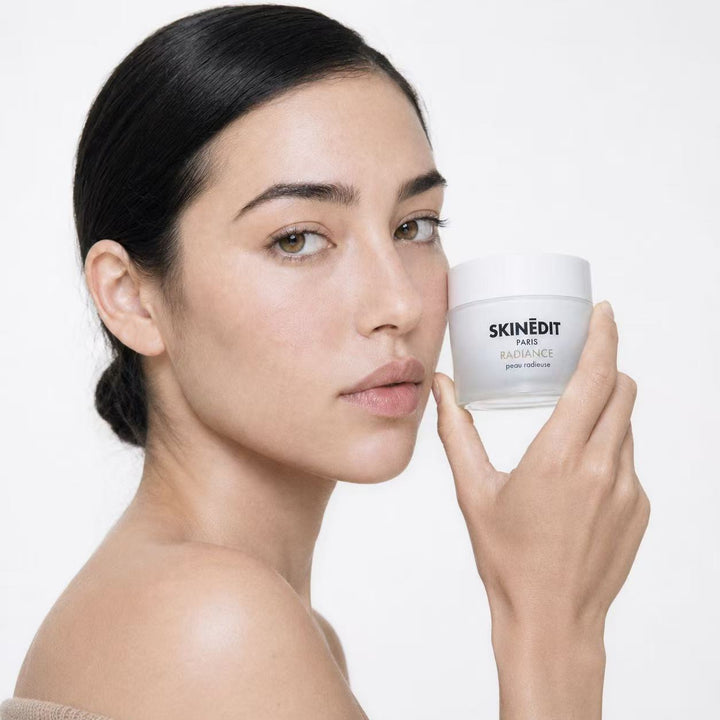
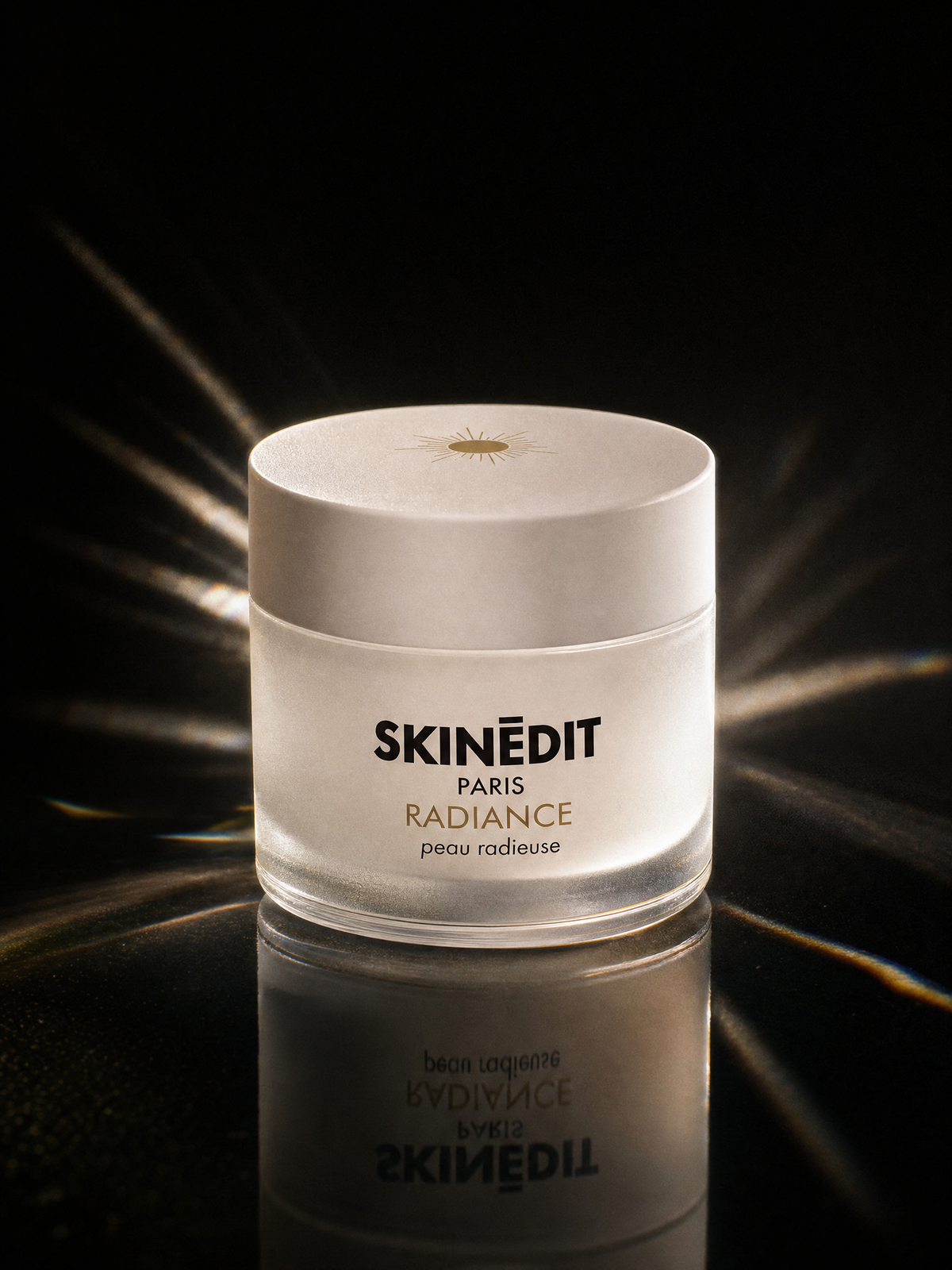
RADIANCE approaches visible uneven tone as a pigment system rather than a single brightening ingredient: a clinically studied polyphenol complex, glutathione-pathway support and an antioxidant architecture designed to complement daily photoprotection and topical care.

Explore the RADIANCE architecture

Where RADIANCE fits — and what the studies actually prove

RADIANCE is built around several pigment-related pathways. Its central ingredient is BELIGHT³™, the grape-seed, grape-pomace, licorice and vitamin C formulation studied in the Asian and Caucasian randomized trials described above.

The formulation also includes a glutathione system with glutathione and supporting nutrients, alongside antioxidant ingredients including maritime pine bark and curcumin.

The evidence levels must remain separate:

  • BELIGHT³™ has two randomized, double-blind, placebo-controlled human trials on pigmentation-related outcomes.
  • Oral glutathione has a wider but mixed-quality clinical literature reviewed systematically in 2025.
  • L-cystine, selenium, pine bark and curcumin contribute mechanistic or ingredient-level rationale, but should not inherit the BELIGHT³™ dark-spot trial results.
  • None of those ingredient studies is automatically a finished-product RADIANCE trial.

That distinction is central. A strong formulation can be built from evidence at several levels without pretending that every mechanism has already been demonstrated in the final capsule.

Dark spots in Singapore, Hong Kong and Japan

Dark spots, PIH and melasma are particularly relevant in Singapore, Hong Kong and Japan, where high cumulative light exposure and a broad range of Asian skin phototypes make pigment management a common concern.

In Singapore and Hong Kong, year-round UV exposure makes consistent photoprotection especially important. For melasma and PIH, visible light may also contribute, which makes tinted sunscreens with iron oxides worth considering.

The first BELIGHT³™ randomized trial is particularly relevant to Asian consumers because it specifically enrolled Asian participants with Fitzpatrick phototypes III–IV and facial dark spots. However, ten people with melasma were excluded during screening, so those results should not be presented as a melasma trial.

That last distinction matters for search accuracy: evidence for “dark spots” is not automatically evidence for every pigmentation disorder.

Frequently asked questions

Can you fade dark spots from the inside out?

Oral supplements can support pigmentation outcomes when the specific ingredient or formulation has human evidence, but they work best as adjuncts. Daily photoprotection and appropriate topical or procedural treatment remain the foundation for most dark spots.

What is the best supplement for dark spots?

There is no universal best supplement. BELIGHT³™, a defined grape, licorice and vitamin C formulation, has two randomized placebo-controlled trials on facial pigmentation. Oral glutathione also has several controlled studies, although a 2025 systematic review found mixed study quality.

Does glutathione fade dark spots?

Several oral glutathione trials have reported reductions in melanin index, and a 2025 systematic review identified five randomized controlled oral studies. The evidence is promising but heterogeneous, and glutathione should not be described as a guaranteed treatment for every type of hyperpigmentation.

Does vitamin C fade dark spots from within?

Vitamin C has antioxidant and melanogenesis-related biology, but oral vitamin C alone has less direct dark-spot evidence than defined combination formulas such as BELIGHT³™. Its mechanistic role should not be confused with proof that a vitamin C capsule alone removes facial spots.

Can sunscreen fade existing dark spots?

Sunscreen mainly prevents additional UV-driven pigment and helps other treatments work without continual re-darkening. In melasma, visible-light-protective tinted sunscreen containing iron oxides can improve treatment outcomes compared with UV-only sunscreen.

What type of sunscreen is best for melasma and hyperpigmentation?

Use high broad-spectrum UV protection consistently. For melasma and PIH, especially in darker phototypes, tinted sunscreen containing iron oxides can add visible-light protection, which has clinical evidence in pigmentation management.

How long does it take to fade dark spots?

It depends on the diagnosis. PIH may gradually fade over months, melasma is often chronic and relapsing, and solar lentigines can persist until treated. Oral dark-spot trials commonly assess outcomes after about 6–12 weeks or longer.

Are dark spots and melasma the same thing?

No. “Dark spots” is a broad cosmetic description. Melasma is a specific chronic pigment disorder, while solar lentigines and post-inflammatory hyperpigmentation have different causes and treatment patterns.

Can a laser remove dark spots faster than supplements?

For discrete solar lentigines, laser and light-based procedures can produce faster and larger changes than oral supplements, although risks such as post-inflammatory hyperpigmentation depend on the device, skin type and operator. A dermatologist can determine whether a lesion is appropriate for procedural treatment.

Which SKINĒDIT Protocol is for dark spots and uneven tone?

RADIANCE is the SKINĒDIT Protocol built around pigmentation and visible clarity. Its architecture includes BELIGHT³™, which has randomized human dark-spot data, plus glutathione-pathway and antioxidant support. RADIANCE is designed to complement, not replace, sunscreen and topical pigment care.

Related reading

References

Pouchieu C, Pourtau L, Gaudout D, Gille I, Chalothorn K, Perin F. Effect of an oral formulation on skin lightening: results from in vitro tyrosinase inhibition to a double-blind randomized placebo-controlled clinical study in healthy Asian participants. Cosmetics. 2023;10(5):143.

Tursi F, Pourtau L, Roveda G, et al. Clinical efficacy of BELIGHT³™ on dark spot pigmentation in Caucasian subjects. Cosmetics. 2025;12(1):27.

Sarkar R, Yadav V, Yadav T, et al. Glutathione as a skin-lightening agent and in melasma: a systematic review. International Journal of Dermatology. 2025;64(6):992–1004.

Castanedo-Cazares JP, Hernández-Blanco D, Carlos-Ortega B, et al. Near-visible light and UV photoprotection in the treatment of melasma: a double-blind randomized trial. Photodermatology, Photoimmunology & Photomedicine. 2014;30(1):35–42.

Mardani S, et al. Treatment of solar lentigines: a systematic review of clinical trials. Journal of Cosmetic Dermatology. 2025.

Kashetsky N, et al. Post-inflammatory hyperpigmentation: a systematic review of treatment outcomes. Journal of the European Academy of Dermatology and Venereology. 2024.

Evidence note: the 84.9% tyrosinase-inhibition figure for BELIGHT³™ is an in-vitro enzyme result, not a human percentage reduction in dark spots. The 2023 and 2025 BELIGHT³™ studies tested the branded ingredient formulation, not finished RADIANCE. Ingredient evidence, mechanistic evidence and finished-product evidence should not be treated as interchangeable. Food supplements do not replace sunscreen, medical diagnosis or evidence-based treatment of pigment disorders.

Jaouad Bentaguena
Écrit parJaouad BentaguenaFounder, SKĪNĒDIT Paris

Jaouad Bentaguena is the founder of SKINĒDIT Paris. He researches and writes the SKINĒDIT's Intelligence journal himself — working from the peer-reviewed literature and alongside the scientists and clinical partners behind each protocol, to translate the science of deep skincare into something clear enough to act on.

À propos de l’auteur
Continuer la lecture
Retour à Intelligence