Does vitamin C fade dark spots? Topical vitamin C can help improve some pigmentation, although results depend on the formula and the type of mark. Evidence for oral vitamin C alone is limited. Trials of oral combinations support the specific blends studied, rather than proving that vitamin C capsules have the same effect as a serum. Daily sun protection remains essential. [1] [2]
If you want a more even-looking complexion, the useful question is what each step can contribute. A serum, a vitamin supplement and a combined oral formula have different evidence behind them.
Vitamin C serum or supplements: what is the difference?
| Approach | What human research supports | What to check |
|---|---|---|
| Topical vitamin C | Small studies report improvements in selected pigmentation outcomes. [2] [3] [4] | The vitamin C form, complete formulation, skin tolerance and type of pigmentation studied. |
| Oral vitamin C alone | Vitamin C supports normal nutrition and antioxidant biology; direct evidence for fading facial dark spots with vitamin C alone is limited. [5] | A nutritional role is different from a demonstrated cosmetic result. |
| Combined oral formulas | Some defined blends containing vitamin C have placebo-controlled pigmentation trials. [6] [7] | Whether the study tested that exact blend or the finished product you are considering. |
How does vitamin C affect pigmentation?
Melanin gives skin its colour. Vitamin C has antioxidant activity and can influence chemical steps involved in melanin formation, including reactions involving the enzyme tyrosinase. These mechanisms help explain its use in pigmentation formulas; visible results still need human evidence. [5]

What do topical vitamin C studies actually show?
A 2023 systematic review included seven publications and 139 volunteers across melasma and photoageing research. It found evidence of pigment lightening, but the studies were small and used different formulations; some included procedures to assist treatment. This was not seven trials of an ordinary vitamin C serum used alone for dark spots. [2]
Existing sun spots: a modest, formulation-specific result
A double-blind study in 27 Japanese women compared a lotion containing 6% of a vitamin C derivative with its placebo on opposite sides of the face for 24 weeks. Instrument readings supported improved lightness of sun spots, but visual pigmentation scores did not clearly differ between treatments at the final assessment. That is a narrower result than complete visible clearance. [3]
Melasma: a small comparison with hydroquinone
In a 16-week trial, 16 women used 5% ascorbic acid on one side of the face and 4% hydroquinone on the other, with daily sunscreen. Participants rated improvement more favourably on the hydroquinone side; instrument-measured colour changes did not differ significantly. The ascorbic-acid side had fewer reported side effects. [4]
These findings support topical vitamin C as an option to consider. They do not establish that every serum has the same performance or that different causes of pigmentation respond alike.
What matters when choosing a vitamin C serum?
The complete formula matters more than the percentage alone. L-ascorbic acid and its derivatives differ in stability and delivery. A study of one preparation cannot establish the performance of another. [5]
- Look for evidence on the actual formula. Ingredient research is useful, but a finished-product study is more directly relevant to that serum.
- Follow its storage and use instructions. Stability is part of formulation quality.
- Pay attention to tolerance. Irritating skincare can contribute to dark marks, particularly in darker skin tones. Persistent burning or inflammation is a reason to stop and seek advice. [1]
Can oral vitamin C alone fade dark spots?
Vitamin C is essential for normal skin biology. However, the evidence discussed here does not establish vitamin C tablets alone as a reliable facial dark-spot treatment. Correcting inadequate nutrition and producing a visible change in established pigmentation are different outcomes. [5]
When an oral study tests vitamin C together with other ingredients, its results belong to the combination. The trial cannot tell us how much benefit came from vitamin C by itself.
Why study vitamin C within an oral combination?
BELIGHT³™ combines grape seed, grape pomace and licorice extracts with coated vitamin C. Two randomized, double-blind, placebo-controlled trials studied the defined blend over 12 weeks: one enrolled 58 Asian adults and the other 66 Caucasian adults. Selected instrumental pigmentation and complexion assessments favoured the active formulation. [6] [7]
These studies concerned dark spots and facial hyperpigmentation. The 2023 trial excluded participants identified with melasma. They therefore inform the evidence for this pigmentation blend, without establishing a melasma treatment or isolating vitamin C’s contribution.
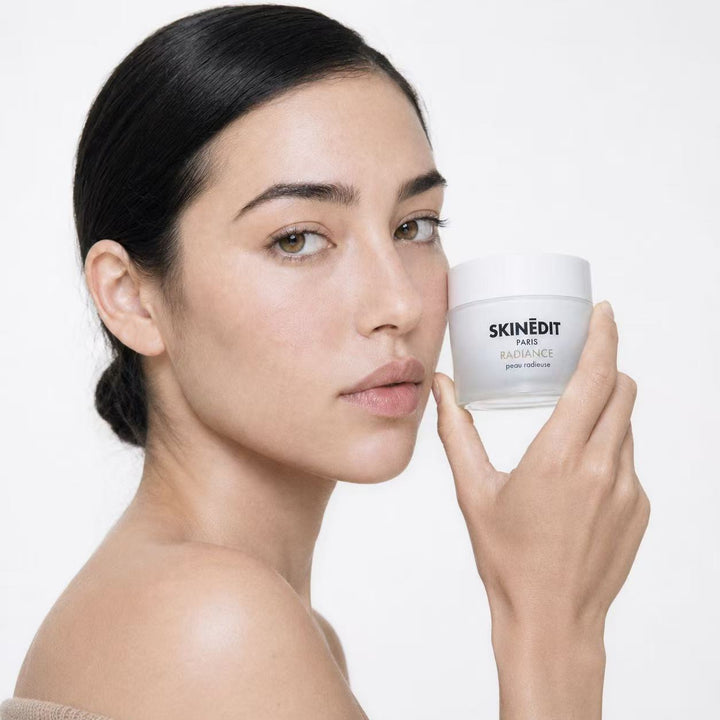
This research helped inform our selection of BELIGHT³™ for RADIANCE, SKINĒDIT’s oral protocol for dark spots and uneven tone. For the wider evidence, see our guide to supplements for hyperpigmentation.
Why RADIANCE brings several ingredients together
For someone considering an oral step alongside skincare, the question is what deserves a place in the formula. RADIANCE brings BELIGHT³™ together with liposomal glutathione, L-cystine, selenium and selected botanical ingredients, organised around pigmentation and antioxidant biology.
The product page explains why each ingredient was selected, the research informing those choices and how the complete formula fits into a daily routine. The studies cited above tested BELIGHT³™, rather than finished RADIANCE; a combined ingredient list does not by itself prove superior results.
The ritual is simple: two capsules each morning with food. The 90-day protocol provides a framework for consistency alongside daily photoprotection and appropriate skincare.
Pigment · Signal · Oxidative Stress
Your goal is a more even-looking complexion. Discover why SKINĒDIT selected BELIGHT³™, glutathione and supporting antioxidants for one formula—and explore the morning ritual that brings it into your routine.
How long does vitamin C take to fade dark spots?
Think in months, with no guaranteed deadline. The topical studies described above evaluated outcomes at 16 and 24 weeks. The BELIGHT³™ trials assessed their particular oral blend at 12 weeks. Those are measurement points, not promises that every mark will disappear. [3] [4] [6] [7]
Compare photographs under similar lighting and record changes to your routine. A product’s suggested course, including RADIANCE’s 90-day protocol, should not be confused with a clinically guaranteed response time.
Why sunscreen remains part of the routine
The American Academy of Dermatology recommends broad-spectrum, water-resistant SPF 30 or higher for pigmentation care. A tinted formula containing iron oxide adds protection against visible light, which can worsen dark spots in darker skin tones. [1]
A study published in 2025 found that 7% topical ascorbic acid did not outperform its vehicle against pigmentation induced by controlled visible-light exposure on the back. This was a specific prevention model, rather than a test of existing facial spots. It illustrates why an antioxidant should not be assumed to cover every light-related pigmentation pathway. [8]
For persistent symmetrical patches or suspected melasma, read our separate guide to melasma supplements and their evidence and seek a clear diagnosis before choosing treatment.
Frequently asked questions
Does vitamin C serum remove dark spots completely?
Complete removal is not established for every formula or pigmentation type. Some trials show improvement in pigment measurements, while visible assessments may be less convincing. Think of vitamin C as one possible part of a routine. [2] [3]
Is vitamin C serum or oral vitamin C better for dark spots?
Topical preparations have more direct pigmentation evidence than oral vitamin C alone. Studies of combined oral formulas answer a different question and should be assessed separately.
Is a higher vitamin C percentage always better?
No universal optimum is established. The vitamin C form, the rest of the formulation and skin tolerance matter alongside concentration. A higher number on the label does not establish a better result. [2]
Can vitamin C make dark spots worse?
An irritating product can contribute to post-inflammatory dark marks, regardless of its intended brightening effect. Stop a product that causes persistent irritation and seek advice if the reaction continues. [1]
What is the difference between RADIANCE and a vitamin C tablet?
RADIANCE is a combined nutricosmetic formula containing BELIGHT³™, glutathione and other selected ingredients. Its formulation rationale extends beyond vitamin C alone. The BELIGHT³™ trials provide ingredient-level pigmentation evidence; they do not establish the effectiveness of finished RADIANCE.
Can a vitamin C serum replace sunscreen?
No. Vitamin C does not provide the protection of sunscreen. Keep daily photoprotection in the routine, including visible-light protection where appropriate. [1]
Related reading
- How to fade dark spots from the inside out
- Topical vs ingestible skincare: how the approaches differ
References
- American Academy of Dermatology. How to fade dark spots in darker skin tones.
- Correia G, Magina S. Topical vitamin C for melasma and photoageing: a systematic review. Journal of Cosmetic Dermatology. 2023;22:1938–1945. Read the topical vitamin C review.
- Ishikawa Y, et al. A topical vitamin C derivative for solar lentigines: a controlled half-face study. Archives of Dermatological Research. 2019;311:183–191. Read the sun-spot trial.
- Espinal-Perez LE, et al. Ascorbic acid compared with hydroquinone in melasma: a randomized trial. International Journal of Dermatology. 2004;43:604–607. Read the melasma trial.
- Pullar JM, Carr AC, Vissers MCM. The roles of vitamin C in skin health. Nutrients. 2017;9:866. Read the skin-biology review.
- Pouchieu C, et al. Oral formulation and skin lightening: laboratory testing and a randomized trial in Asian participants. Cosmetics. 2023;10:143. Read the 2023 BELIGHT³™ study.
- Tursi F, et al. Clinical efficacy of Belight3™ on dark spot pigmentation in Caucasian subjects. Cosmetics. 2025;12:27. Read the 2025 BELIGHT³™ study.
- Piffaut V, et al. Topical actives and visible-light-induced pigmentation: two randomized controlled trials. Frontiers in Pharmacology. 2025;16:1651068. Read the visible-light study.
About this article: SKINĒDIT publishes this article and makes RADIANCE. Ingredient studies, finished-product studies and biological mechanisms provide different levels of evidence. New, changing or unexplained pigmentation should be assessed by a qualified healthcare professional.


Jaouad Bentaguena est le fondateur de SKINĒDIT Paris. Il recherche et écrit lui-même le journal Intelligence de SKINĒDIT, à partir de la littérature évaluée par les pairs et en dialogue avec les scientifiques et partenaires cliniques associés aux protocoles, afin de rendre la science profonde de la peau et du cheveu claire et utile.
À propos de l’auteur