Does biotin actually help hair grow? A 2026 systematic review finds no consistent benefit without deficiency. Learn when biotin helps, how much you need, its lab-test risks and what matters more for thinning hair.
The short answer: biotin does not reliably make hair grow faster, thicker or denser if you are not biotin-deficient. A 2026 systematic review of 10 human studies found that biotin alone did not consistently improve objective hair-growth outcomes, and the highest-quality earlier review reached the same conclusion. True biotin deficiency can cause hair thinning, so replacing a deficiency can help — but clinically meaningful deficiency is uncommon in people eating a varied diet. The bigger issue with high-dose biotin is not toxicity; it is that milligram-dose supplements can interfere with important blood tests, including some thyroid and cardiac troponin assays.
Biotin has become the default “hair vitamin.” It appears in gummies, powders and hair-skin-nail formulas, often in doses hundreds of times higher than the amount adults actually need.
But does biotin work for hair growth? The answer is much less impressive than the marketing. The newest evidence does not support routine high-dose biotin for hair loss in people without a deficiency — and taking more of a vitamin you already have enough of is not the same thing as treating the reason your hair is thinning.
What is biotin?
Biotin — also called vitamin B7 or vitamin H — is a water-soluble B vitamin. It acts as a cofactor for several enzymes involved in normal metabolism of fats, carbohydrates and amino acids.
Biotin deficiency can cause symptoms including dermatitis, neurological changes and hair thinning or loss. That biological fact is largely responsible for biotin’s reputation as a hair-growth vitamin.
But there is a crucial difference:
If deficiency causes hair loss, correcting the deficiency can help. That does not mean taking extra biotin makes normal hair grow better.
This “deficiency logic” is one of the most common mistakes in supplement marketing.
Does biotin actually work for hair growth?
For most people, the evidence says no.
The most up-to-date systematic review, published in 2026, evaluated 10 human studies of biotin and hair outcomes. The authors concluded that biotin monotherapy did not show consistent benefit on objective hair-growth measures. When improvements were reported, they were often in combination treatments, making it impossible to know how much — if any — benefit came from biotin itself.
The review’s conclusion was straightforward: current evidence does not support routine biotin supplementation for alopecia in the absence of documented deficiency.
That agrees with a focused 2024 review that searched specifically for human studies of oral biotin for hair growth or quality. Only three studies met its criteria. The strongest was placebo-controlled and found no difference in hair growth between biotin and placebo. The other two involved unusual populations and did not provide convincing evidence that biotin improves hair growth generally.
An earlier 2017 review found the same pattern: reports of improvement almost always involved people with an underlying disorder, deficiency or unusual hair condition. There was insufficient evidence for supplementation in otherwise healthy people.
A 2024 trial tested 5 mg of biotin — what happened?
A small randomized crossover study published in 2024 gives a useful real-world example.
Ten healthy men without hair disorders received, in different periods:
- oral biotin 5 mg daily;
- topical 5% minoxidil;
- or the two together.
Five milligrams sounds small until you convert it: 5 mg = 5,000 micrograms.
Biotin alone did not significantly increase measured hair-growth speed during the study. The combination arm did show a short-term increase, but the trial lasted only 14 days per intervention, included just ten men, and was not designed to show that biotin treats female thinning or alopecia.
The useful takeaway is not that biotin “never does anything.” It is that even a dose far above nutritional requirements did not demonstrate a clear independent hair-growth effect in healthy adults.
How much biotin do you actually need?
The US National Institutes of Health lists an Adequate Intake of 30 micrograms per day for adults and 35 micrograms per day during breastfeeding.
For perspective:
| Amount | Equivalent | Compared with adult Adequate Intake |
|---|---|---|
| 30 mcg | 0.03 mg | Adult daily Adequate Intake |
| 1 mg | 1,000 mcg | About 33× the Adequate Intake |
| 5 mg | 5,000 mcg | About 167× the Adequate Intake |
| 10 mg | 10,000 mcg | About 333× the Adequate Intake |
There is no established Tolerable Upper Intake Level for biotin because conventional toxicity has not been clearly demonstrated. But that does not mean megadoses are useful or consequence-free.
Who can actually benefit from biotin?
Biotin supplementation makes sense when there is a genuine deficiency or a condition that places someone at meaningful risk of deficiency.
Situations described in the medical literature include:
- rare inherited disorders such as biotinidase deficiency;
- significant malnutrition or malabsorption;
- some gastrointestinal or bariatric-surgery contexts;
- long-term exposure to very large amounts of raw egg white, whose avidin can bind biotin;
- certain medication-related or metabolic situations;
- and selected pregnancy or lactation contexts where biotin status can change.
Even then, “hair loss” alone does not prove biotin deficiency.
Should you test your biotin level if your hair is falling out?
Not necessarily.
The 2026 systematic review notes that routine interpretation of biotin status is more complicated than it sounds: serum assays are not fully standardized, there is no universally accepted clinical cut-off for marginal deficiency, and serum concentrations can reflect recent intake rather than tissue status.
So rather than ordering a biotin test automatically, the more useful approach is to look at the type of hair loss, diet, medical history, medications, gastrointestinal history and other possible deficiencies.
If true biotin deficiency is suspected, that assessment belongs in a broader clinical work-up.
Does biotin stop hair shedding?
There is no good evidence that high-dose biotin reliably stops common forms of shedding such as telogen effluvium when biotin status is adequate.
Controlled studies comparing people with telogen effluvium with healthy controls have not consistently found lower biotin status in the shedding group.
This matters because diffuse shedding has many other common triggers:
- illness or fever;
- rapid weight loss or restrictive dieting;
- postpartum hormonal change;
- iron deficiency;
- thyroid dysfunction;
- medication changes;
- psychological or physiological stress;
- and underlying female-pattern hair loss.
If the trigger is not biotin deficiency, more biotin does not remove the trigger.
Does biotin help female-pattern hair loss?
There is no high-quality evidence that biotin alone treats female-pattern hair loss.
Female-pattern hair loss is a follicular miniaturisation disorder. A progressively widening part, reduced density over the crown and increasingly fine hairs point toward a different biology from nutritional deficiency.
This is precisely why diagnosis matters. A hair vitamin cannot be expected to treat every cause simply because all of them produce the same visible outcome: less hair.
For a broader decision framework, see best supplement for women’s hair thinning.
Is iron more important than biotin for hair?
Iron deficiency deserves attention when it is actually present. Low iron stores are associated with some forms of diffuse hair loss, particularly in women, but ferritin targets and the benefit of supplementation in people who are not deficient remain debated.
So “take iron instead of biotin” is not the right answer either.
The better rule is:
Correct deficiencies that are documented. Do not turn every nutrient associated with hair into a universal hair-growth supplement.
If shedding is diffuse, persistent or accompanied by fatigue, heavy menstrual bleeding, restrictive diet or other risk factors, a clinician may consider a complete blood count and ferritin as part of the assessment.
What about vitamin D?
Vitamin D is another nutrient frequently discussed in hair loss.
Recent meta-analyses have found that vitamin-D deficiency is more common in several non-scarring alopecias — including female-pattern hair loss and telogen effluvium — than in controls.
But association is not the same as proof that vitamin-D supplements regrow hair in everyone with thinning. Correcting a documented deficiency is sensible; taking large amounts without knowing your status is a different proposition.
The bigger question: what type of hair loss do you have?
Before choosing any supplement, look at the pattern.
| What you notice | Possible direction | Better next question |
|---|---|---|
| Sudden diffuse shedding | Telogen effluvium | Was there illness, childbirth, weight loss, stress, medication change or deficiency? |
| Widening central part / crown thinning | Female-pattern hair loss | Is follicular miniaturisation present? |
| Smooth round bald patches | Alopecia areata or another focal disorder | Does this need dermatologic assessment? |
| Hairline breakage with tight styling | Traction | Can the mechanical trigger be removed? |
| Postpartum shedding at 2–4 months | Postpartum telogen effluvium | Is it following the expected recovery timeline? |
For the broader shedding pathway, read why is my hair shedding at 40? and postpartum hair loss.
The biotin lab-test warning matters more than most people realise
Biotin is generally well tolerated, but high-dose supplementation can cause a different problem: interference with laboratory immunoassays.
The US Food and Drug Administration has repeatedly warned that biotin can produce incorrect results in certain laboratory tests. The exact direction of the error depends on the test design.
Examples can include:
- thyroid tests;
- some hormone assays;
- vitamin and endocrine measurements;
- and certain cardiac troponin tests used when clinicians are evaluating a possible heart attack.
FDA has specifically documented concern about falsely low troponin values with susceptible assays.
Laboratory manufacturers are increasingly redesigning assays to reduce this problem, so not every current test is affected. But the risk has not disappeared.
Tell your doctor, pharmacist and laboratory staff if you take biotin. Do not rely on a universal “stop it X hours before testing” rule: the appropriate washout can depend on the amount you take, kidney function and the specific assay. Follow the instructions of the clinician or laboratory performing the test.
Can biotin interfere with thyroid tests?
Yes, some thyroid immunoassays can be affected by high circulating biotin. Depending on the assay architecture, results can appear falsely high or falsely low and may resemble patterns seen in thyroid disease.
This is especially relevant because thyroid dysfunction itself can cause diffuse hair loss. Taking a high-dose hair supplement while being investigated for shedding can therefore complicate one of the very tests used to determine why the shedding is happening.
Signal · Anchor · Fibre
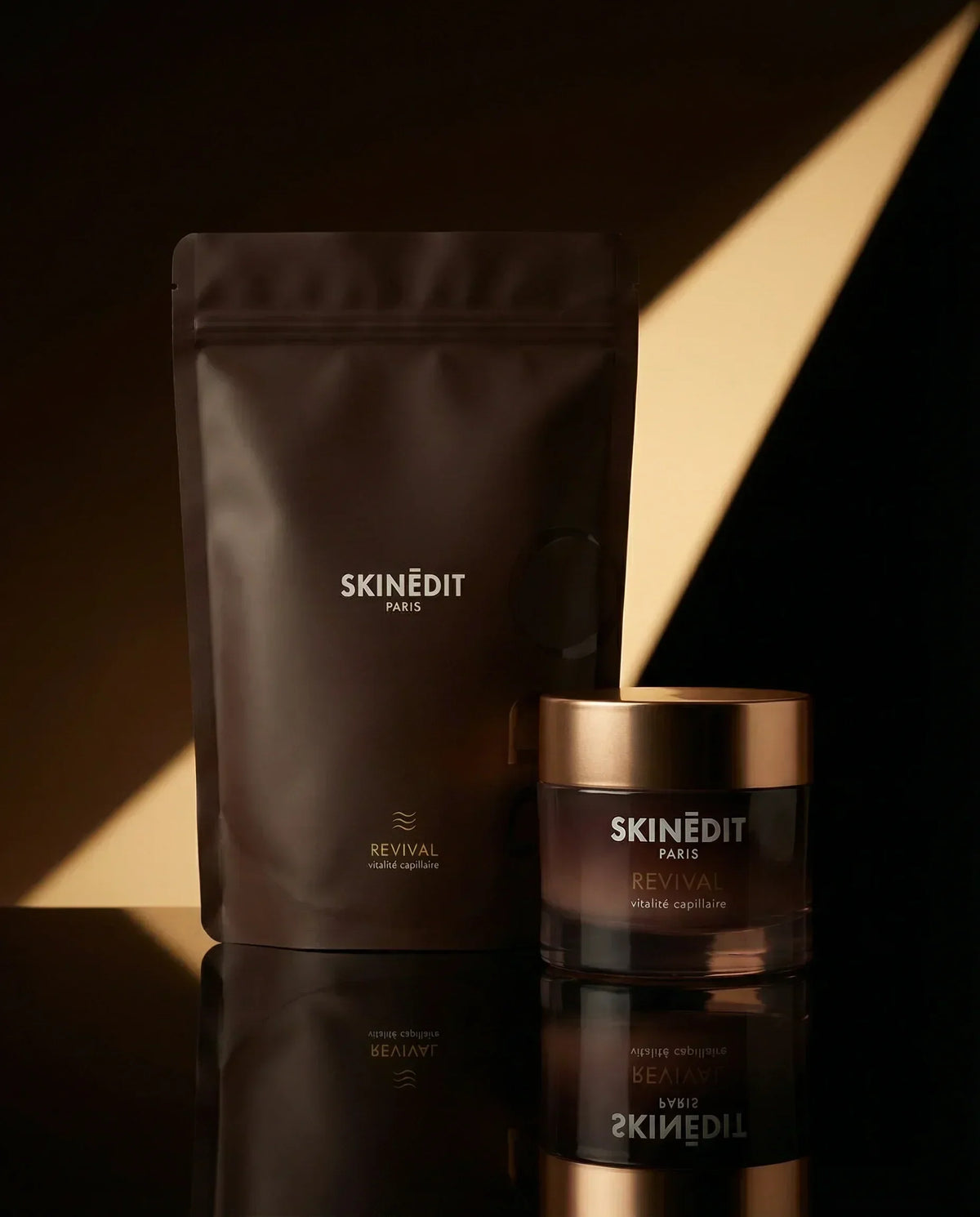
REVIVAL is not built on the proposition that “more biotin = more hair.” Its formulation begins with the follicle, hair-cycle signalling and fibre biology, using defined hair actives within a multi-pathway Protocol rather than a biotin megadose.
Where REVIVAL fits: formula evidence is not biotin evidence
One of the clinically studied hair ingredients used within the REVIVAL architecture is Cynatine® HNS, a keratin-based ingredient complex that has been studied as a complete formulation.
In a randomized, double-blind, placebo-controlled 90-day trial, 50 women with stressed or damaged hair and nails received either Cynatine HNS or placebo. The active group showed improvements in hair-pull measurements, anagen/telogen ratio, hair tensile strength and other hair-quality measures relative to placebo.
That trial is relevant — but it makes an important point about biotin too. Cynatine HNS in the study was a multi-component formula containing keratin plus vitamins and minerals, including a modest amount of biotin. The result therefore supports the studied ingredient complex; it does not prove that isolated biotin produced those outcomes.
This is the distinction SKINĒDIT uses when evaluating hair supplements:
- isolated nutrient evidence;
- defined ingredient-complex evidence;
- and finished-product evidence
should not be treated as the same thing.
So what should you do instead of taking a biotin megadose?
- Identify the pattern. Diffuse shedding and progressive miniaturisation are not the same condition.
- Look for a trigger. Illness, postpartum change, rapid weight loss, medication changes and major stress commonly precede telogen effluvium.
- Correct genuine deficiencies. Iron, vitamin D, zinc, protein or other nutritional factors matter when inadequate, but should not automatically be supplemented at high doses.
- Use evidence-based treatment when the diagnosis calls for it. A vitamin cannot substitute for appropriate treatment of female-pattern hair loss, alopecia areata or thyroid disease.
- Judge hair supplements as complete formulas. Look for defined ingredients, human studies relevant to the intended outcome and realistic evidence language.
Frequently asked questions
Does biotin actually work for hair growth?
Biotin can improve hair changes caused by true biotin deficiency, but current systematic reviews do not support routine biotin supplementation for hair growth or alopecia in people without documented deficiency.
Does biotin make hair thicker?
There is no strong evidence that isolated biotin makes normal, biotin-sufficient hair thicker. Some multi-ingredient products containing biotin have shown hair benefits, but those results cannot be attributed to biotin alone.
Does biotin stop hair shedding?
Not reliably. Common diffuse shedding such as telogen effluvium has many triggers, and controlled studies have not consistently found biotin deficiency in affected patients. Biotin is most relevant when an actual deficiency or deficiency-risk condition exists.
How much biotin should I take for hair?
The adult Adequate Intake is 30 micrograms per day. There is no established evidence-based high dose for improving hair in biotin-sufficient adults. A 5 mg supplement contains 5,000 micrograms — about 167 times the adult Adequate Intake.
Is 10,000 mcg of biotin too much?
Ten thousand micrograms is 10 mg, more than 300 times the adult Adequate Intake. Conventional toxicity is not the main concern, but high circulating biotin can interfere with some laboratory tests. There is no high-quality evidence that 10,000 mcg produces better hair growth in a biotin-sufficient person.
How do I know if I am biotin-deficient?
True deficiency is uncommon and can involve hair thinning alongside skin or neurological symptoms. Risk factors include rare genetic disorders, severe malnutrition or malabsorption and certain special medical circumstances. Routine serum biotin measurement is not a perfect marker, so suspected deficiency should be interpreted in clinical context.
Can biotin interfere with thyroid blood tests?
Yes. High-dose biotin can interfere with certain immunoassays used for thyroid and other hormone measurements. Tell the clinician and laboratory that you take biotin before blood testing.
Can biotin interfere with a heart-attack blood test?
Yes, certain cardiac troponin assays have been susceptible to biotin interference, including falsely low results. FDA continues to warn about this risk for tests that have not been redesigned to mitigate biotin interference.
Is iron better than biotin for hair loss?
Iron supplementation is appropriate when iron deficiency is present; it is not a universal hair treatment either. The correct choice depends on the cause of the hair loss rather than which vitamin has the strongest marketing.
Is vitamin D better than biotin for hair?
Vitamin-D deficiency is more common in several types of alopecia in observational studies, but that does not prove vitamin D supplements regrow hair in everyone. Correct a documented deficiency rather than assuming either vitamin is the cause.
Which SKINĒDIT Protocol is for thinning hair?
REVIVAL is the SKINĒDIT Protocol for ongoing thinning and hair-density support. Its formulation strategy is based on follicular signalling, anchoring and hair-fibre biology rather than using high-dose biotin as the central claim.
Related reading
- Best supplement for women’s hair thinning
- Why is my hair shedding at 40?
- Menopause hair loss: what helps?
- Postpartum hair loss: when it starts, peaks and stops
References
Moltó-Balado P, Simeó-Monzo A, del Barrio-Gonzalez A. Effectiveness of biotin supplementation for hair growth in patients with alopecia: a systematic review. Dermato. 2026;6(2):17.
Yelich A, Jenkins H, Holt S, Miller R. Biotin for hair loss: teasing out the evidence. Journal of Clinical and Aesthetic Dermatology. 2024;17(8):56–61.
Valentim FO, Miola AC, Miot HA, Schmitt JV. Efficacy of 5% topical minoxidil versus 5 mg oral biotin versus topical minoxidil and oral biotin on hair growth in men: randomized, crossover, clinical trial. Anais Brasileiros de Dermatologia. 2024;99(4):581–584.
Patel DP, Swink SM, Castelo-Soccio L. A review of the use of biotin for hair loss. Skin Appendage Disorders. 2017;3(3):166–169.
National Institutes of Health Office of Dietary Supplements. Biotin fact sheet for consumers and health professionals.
US Food and Drug Administration. Biotin interference with troponin lab tests; testing for biotin interference in in-vitro diagnostic devices.
Chen Y, Dong X, Wang Y, et al. Serum 25-hydroxyvitamin D in non-scarring alopecia: a systematic review and meta-analysis. Journal of Cosmetic Dermatology. 2024;23(4):1131–1140.
Beer C, Wood S, Veghte RH. A clinical trial to investigate the effect of Cynatine HNS on hair and nail parameters. The Scientific World Journal. 2014;2014:641723.
Evidence note: biotin deficiency can cause hair loss, but current systematic reviews do not support routine high-dose biotin for alopecia in people without deficiency. Multi-ingredient hair trials that include biotin do not establish biotin as the active cause of the result. High-dose biotin can interfere with certain laboratory tests. Persistent, progressive, patchy or unexplained hair loss should be assessed according to the underlying diagnosis rather than treated automatically with a vitamin supplement.

Jaouad Bentaguena is the founder of SKINĒDIT Paris. He researches and writes the SKINĒDIT's Intelligence journal himself — working from the peer-reviewed literature and alongside the scientists and clinical partners behind each protocol, to translate the science of deep skincare into something clear enough to act on.
À propos de l’auteur