The short answer: increased hair shedding at 40 can follow illness, stress, weight loss, medication changes or nutritional deficiency. Perimenopause may also influence hair, but age alone does not explain the change. Start by distinguishing a sudden shed from a gradually widening part, then review the preceding months. The cause determines whether recovery, nutritional correction or ongoing treatment is the priority.
More hair in the shower can be unsettling, particularly when your routine has barely changed. The explanation may lie several months earlier. Three questions help make sense of it: when did it start, what changed beforehand, and is your scalp coverage changing too?
Are you shedding more hair, or is your hair becoming thinner?
Some daily shedding is normal. A persistent increase from your usual pattern, reduced volume or a widening part is more informative than one wash day. A dermatologist can assess shedding and thinning together; both can occur in the same person.[1]
| What you notice | What it may suggest | What to check next |
|---|---|---|
| Suddenly more hairs in the brush or shower | Telogen effluvium: increased shedding across the scalp. | Illness, stress, childbirth, weight loss or other changes in the preceding months. |
| A gradually widening part or thinner crown | Female-pattern hair loss. | Progression over time and a scalp examination. |
| Both increased shedding and a wider part | A temporary shed alongside an underlying pattern of thinning. | Whether both processes need attention. |
| Bald patches, a receding hairline or scalp inflammation | Another hair-loss condition requiring assessment. | Arrange medical advice rather than assuming a temporary shed. |
These are clues, not a diagnosis. Female-pattern hair loss often involves progressively finer hairs and reduced coverage over the central scalp.[2]

Why can shedding begin months after a trigger?
Hair grows in cycles. With telogen effluvium, more follicles than usual enter the resting phase, and the increased shedding becomes noticeable later, often around three months after a trigger.[3]
Look back over that period for:
- an illness, high fever or operation;
- childbirth or changes in hormonal medication;
- major emotional or physical stress;
- substantial weight loss or restrictive eating;
- new medicines or changes in treatment.
For example, an illness in June could be relevant to shedding noticed in September. Sometimes no clear trigger emerges. If you suspect a medicine, discuss the timing with the prescriber before making changes.[1], [3]
Could it be perimenopause?
It could be part of the picture. Hair follicles respond to hormones, and the menopausal transition can be associated with changes in density, strand thickness and texture. Genetics and ageing also matter.[4]
Irregular periods, hot flushes or changing sleep may make a broader menopause discussion useful. They do not explain every shed or exclude a separate hair-loss condition. Our guide to menopause and hair loss examines the treatment questions in more detail.
Could nutrition, thyroid disease or weight loss contribute?
Iron status
Heavy periods, recent blood loss or restricted food intake can make iron deficiency worth investigating. Your clinician may consider a blood count and ferritin, which reflects iron stores. Correct a demonstrated need with appropriate advice; high-dose iron can cause harm and digestive side effects.[3], [5]
Thyroid function
Significant, prolonged underactivity or overactivity of the thyroid can cause diffuse hair loss. Mild or short-lived thyroid changes are less likely to explain it. Mention other symptoms and your thyroid history during assessment; hair recovery after treatment can take months.[6]
Rapid weight loss or reduced intake
A substantial weight change or inadequate food intake can be relevant to a delayed shed. Review the timeline and overall nutrition, including protein. If you take a GLP-1 medicine, discuss shedding with your prescriber: rapid weight loss and reduced intake may contribute, but researchers are still investigating the causes.[7]
Which blood tests should you ask about?
There is no universal hair-loss blood panel. Scalp examination and your history help determine which tests could change the plan. A clinician may investigate iron status, thyroid function or selected deficiencies when there is a reason to suspect them. Hormonal testing may be relevant when thinning accompanies signs such as new coarse facial hair or marked acne.[8]
Normal blood results do not rule out female-pattern hair loss. Likewise, finding a low nutrient level does not prove it is the only cause.
Vitamin D illustrates this distinction: research finds an association between low levels and several forms of hair loss, but that does not establish that extra vitamin D restores density when levels are adequate.[9]
Where does a daily hair supplement fit?
Once the cause and any treatment needs are clearer, you can make a more informed decision about nutritional support. Compare the complete formula, its suitability and the evidence for the specific ingredients and outcomes. Our guide to supplements for women’s hair thinning provides that comparison.
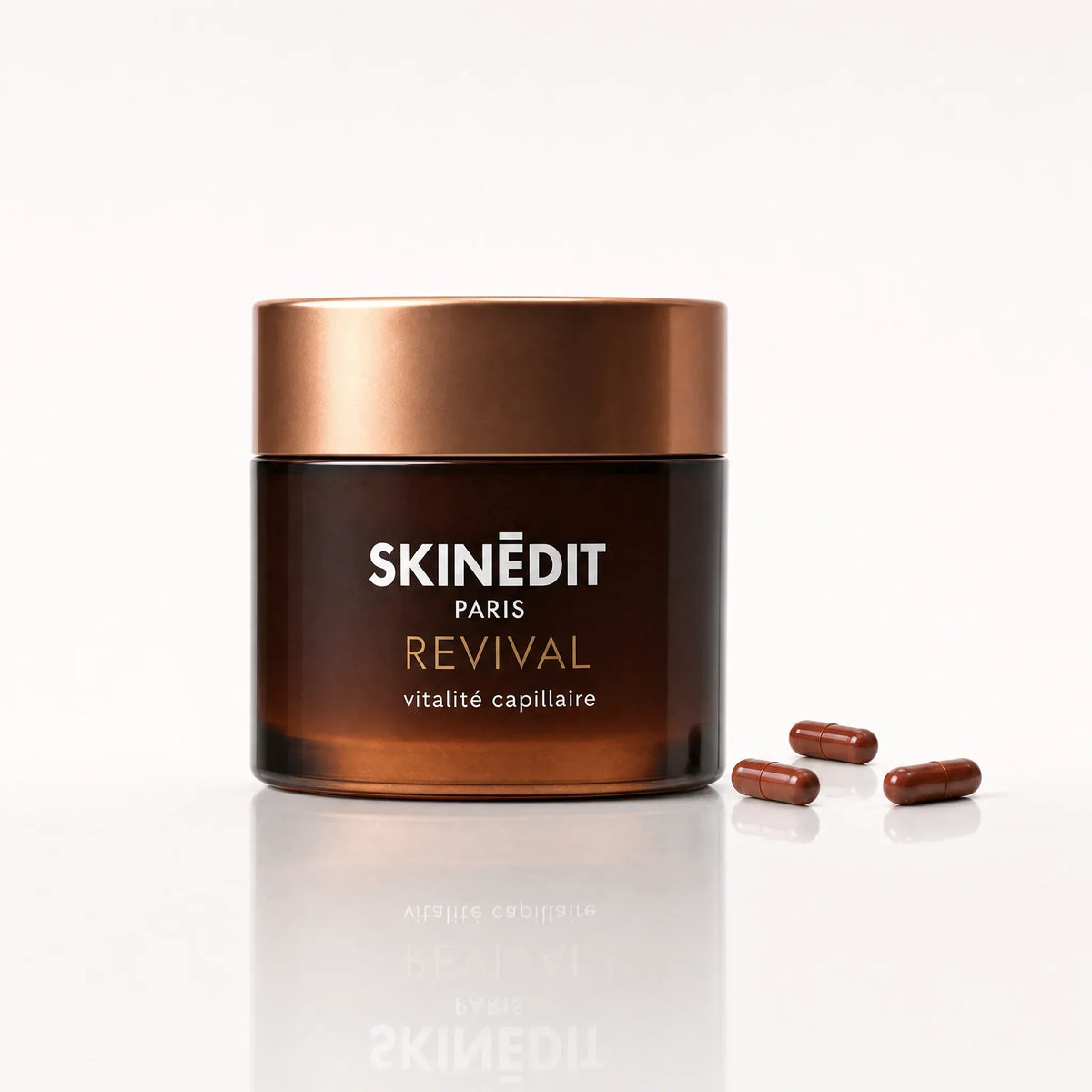
REVIVAL is SKINĒDIT PARIS’s daily oral hair protocol. Its formulation approach — Signal · Cycle · Anchor · Fibre — considers the biology beneath the visible strand and the materials involved in hair-fibre construction.
Your hair routine, from the root.
From AnaGain™ Nu pea-sprout extract to Cynatine® HNS keratin, discover the ingredients selected for REVIVAL, why they were brought together and the research behind the formulation choices.
What does the ingredient research tell us?
A randomised, double-blind, placebo-controlled trial studied a Cynatine® HNS formulation in 50 women with stressed or damaged hair and nails for 90 days. Selected hair-pull, hair-cycle and strength measures favoured the active group. The tested combination included keratin plus vitamins and minerals.[10]
This is evidence for that studied complex. It was not a trial of the finished REVIVAL formula, and it does not establish that REVIVAL treats telogen effluvium or female-pattern hair loss. Ingredient research can inform formulation choices without predicting an individual’s result.

What actually helps, and will the hair grow back?
For temporary telogen effluvium, recovery often follows resolution of the trigger. The shedding phase can last several months, with fullness taking longer to return. Continued or worsening loss deserves reassessment.[3]
For female-pattern hair loss, topical minoxidil is an established option. Benefit takes months to assess and requires continued use. A dermatologist can discuss suitability, irritation or early shedding, and other treatment options. Minoxidil should be avoided during pregnancy, when planning pregnancy and while breastfeeding.[2]
For a medical or nutritional contributor, address the identified condition. This may help the hair, but visible recovery is gradual and more than one cause can be present.
Compare monthly photographs using the same parting, lighting and distance. A more consistent record can help you and your clinician assess change without relying on the number of hairs left after each wash.
When should you seek assessment promptly?
Arrange medical advice for a progressively widening part, substantial unexplained shedding, bald patches or a painful, red or scaly scalp. A receding hairline with eyebrow loss also needs attention: scarring conditions can permanently damage follicles, so a long trial of supplements should not delay assessment.[8], [11]
Before the appointment, note when the change began and bring your medicines, supplements and recent health history. Ask what diagnosis is most likely, whether tests would help, and when the plan should be reviewed.
Frequently asked questions
Is hair shedding at 40 always hormonal?
No. Perimenopause can influence hair, but illness, stress, weight change, nutrition, medication and other hair-loss conditions can also explain a change. The timing and scalp pattern are useful starting points.
Can stress cause shedding even after I feel better?
Yes. The hair cycle creates a delay, so a shed may appear months after a stressful event or illness. Persistent shedding still deserves assessment rather than being attributed indefinitely to stress.
Does a widening part mean the same thing as shedding?
No. A widening part can indicate progressive female-pattern hair loss. Increased shedding can be temporary, and the two can coexist. A scalp examination helps distinguish them.
Should I take biotin before getting blood tests?
Do not start high-dose biotin as a default response to shedding. Evidence for hair benefits without deficiency is limited, and biotin can distort some laboratory results. Tell your clinician and laboratory what you take and follow their testing instructions.[12]
Should I wait three months before seeing someone?
No fixed waiting period is required. Seek advice when a change is persistent, distressing or unexplained, and promptly for patches, scalp symptoms or hairline recession. A product’s study duration is not a reason to postpone diagnosis.
References
- American Academy of Dermatology. Do you have hair loss or hair shedding?
- American Academy of Dermatology. Thinning hair and hair loss: could it be female-pattern hair loss?
- British Association of Dermatologists. Telogen effluvium. Patient information, 2025.
- Gupta AK, et al. Menopause and hair loss in women: exploring the hormonal transition. Maturitas. 2025;198:108378.
- NIH Office of Dietary Supplements. Iron: fact sheet for health professionals.
- British Thyroid Foundation. Hair loss and thyroid disorders.
- American Academy of Dermatology. How can GLP-1 drugs affect my skin, hair, and nails?
- American Academy of Dermatology. Hair loss: diagnosis and treatment.
- Chen Y, et al. Serum 25 hydroxyvitamin D in non-scarring alopecia: a systematic review and meta-analysis. Journal of Cosmetic Dermatology. 2024;23:1131–1140.
- Beer C, Wood S, Veghte RH. A clinical trial to investigate the effect of Cynatine HNS on hair and nail parameters. The Scientific World Journal. 2014;2014:641723.
- American Academy of Dermatology. Frontal fibrosing alopecia: signs and symptoms; diagnosis and treatment.
- NIH Office of Dietary Supplements. Biotin: fact sheet for health professionals.


Jaouad Bentaguena est le fondateur de SKINĒDIT Paris. Il recherche et écrit lui-même le journal Intelligence de SKINĒDIT, à partir de la littérature évaluée par les pairs et en dialogue avec les scientifiques et partenaires cliniques associés aux protocoles, afin de rendre la science profonde de la peau et du cheveu claire et utile.
À propos de l’auteur