The best skin or hair supplement depends on the concern, the formula and the evidence behind it. For firmness, look for studies measuring elasticity or other relevant skin outcomes. For dark spots, consider defined pigmentation formulas alongside daily sun protection. For hair thinning, identify the cause before choosing nutritional support. A useful product makes its purpose, ingredients and study limits easy to understand.
You may notice a softer facial contour, a less even complexion or a parting that looks wider. Those concerns can appear together, but they do not necessarily need the same response. This SKINĒDIT PARIS guide explains how to compare the options and where AGELESS, RADIANCE and REVIVAL fit.
Which type of supplement matches your priority?
| Your priority | What to examine | Start here |
|---|---|---|
| Firmness and elasticity | Human skin measurements, the complete formula and the study design. | Firmness evidence |
| Dark spots and uneven tone | Studies of the exact oral formulation and the type of pigmentation assessed. | Pigmentation evidence |
| Thinning or shedding | The cause of the change, nutritional status and studies of the specific ingredients. | Hair evidence |
A supplement can be relevant to one of these goals without addressing all three. The comparison should begin with what you want to improve and what was actually measured.
What should you look for in a firmness supplement?
Collagen peptides have human research behind them, but results vary. A 2026 review reported improvements in hydration and elasticity, with less reliable evidence for wrinkles and dermal density. A 2025 analysis found that apparent benefits were not significant in its higher-quality or non-industry-funded study subgroups.[1] [2] These findings support careful product comparison, not a blanket promise of firmer skin.
Other formulations focus on nutrients involved in connective-tissue biology. Vitamin C participates in collagen synthesis, while copper is involved in collagen and elastin cross-linking. These roles provide a formulation rationale; they do not establish that taking extra nutrients will visibly tighten skin when intake is already adequate.
Silicon also requires precision: a study of choline-stabilised orthosilicic acid cannot automatically validate every silica ingredient. Likewise, vitamin K2's role in mineral physiology is not evidence that a supplement rebuilds facial bone or lifts jowls.
Where AGELESS fits
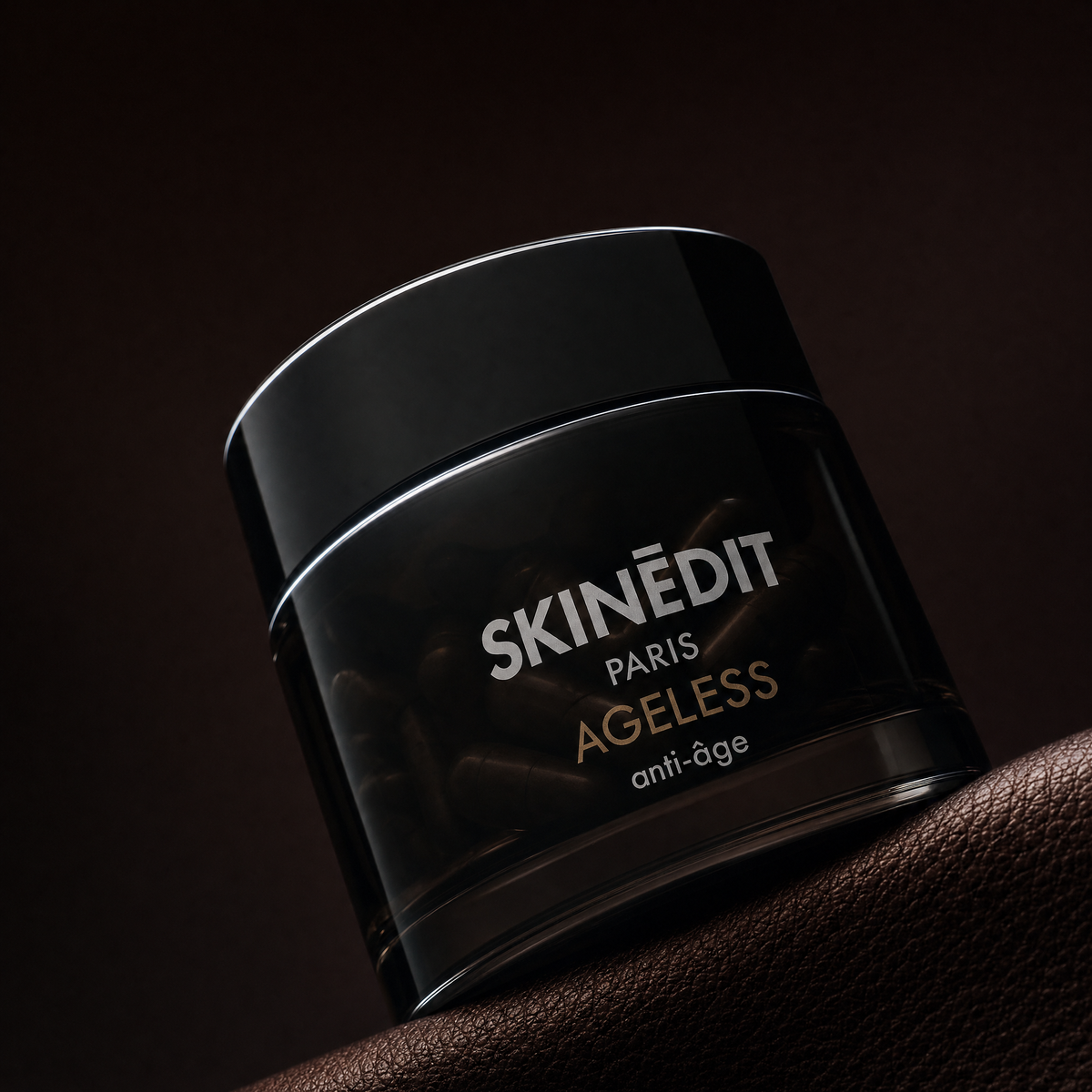
AGELESS brings together thirteen actives organised around mineral and structural physiology, the dermal matrix, and cellular energy and antioxidant defence.
The complete formula underwent an independent 90-day COMPLIFE® evaluation: 33 women enrolled and 32 completed. The evaluation included instrumental measurements and questionnaires; 96.9% of completers reported firmer or more elastic skin by self-assessment. It was open-label and single-arm, without a placebo or parallel control group, so the findings cannot establish how much change was caused by AGELESS.[3]
Discover AGELESS, its formulation and the 90-day results.
Which supplements have evidence for dark spots?
Look for human pigmentation studies of a defined oral formula. An antioxidant mechanism alone does not show that a product reduces visible dark spots. Daily sunscreen and appropriate skincare remain central to a pigmentation routine.
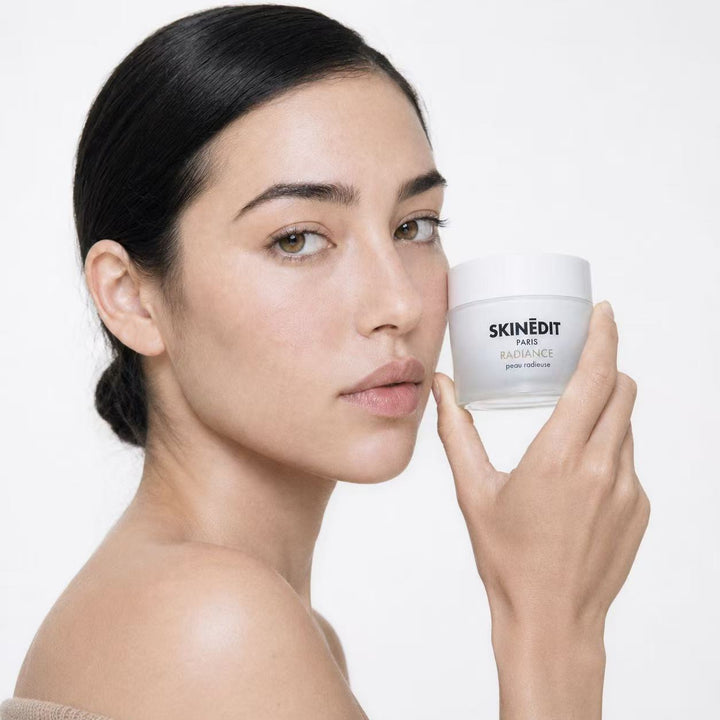
RADIANCE combines BELIGHT³™ with other ingredients selected around pigmentation, signalling and oxidative stress. Its formulation includes glutathione, L-cystine, selenium, pine bark and curcumin, each with its own role and level of supporting evidence.
BELIGHT³™—a defined combination of grape-seed, grape-pomace and licorice extracts with vitamin C—has two randomised, double-blind, placebo-controlled pigmentation studies. The 2023 study enrolled 58 Asian adults, with 53 completing; the 2025 study enrolled 66 Caucasian adults. Both assessed outcomes over 12 weeks and reported improvements in selected pigmentation measures compared with placebo.[4] [5]
These are studies of the BELIGHT³™ formulation, not finished RADIANCE trials. The 2023 trial excluded melasma, so its results should not be presented as proof of melasma treatment.
Explore RADIANCE and the thinking behind its complete formulation.
How should you choose a supplement for thinning hair?
First distinguish progressive thinning from increased shedding or breakage. Persistent, sudden or patchy loss deserves assessment. A clinician may investigate iron status, thyroid function or other contributors when the history and examination suggest them; everyone does not need the same blood-test panel.[6]
Correcting a documented deficiency is different from taking extra nutrients when levels are adequate. Biotin deficiency is uncommon, and evidence for routine biotin supplementation in people without deficiency is limited.[7]
REVIVAL combines AnaGain™ Nu pea-sprout extract, Cynatine® HNS keratin and supporting nutrients within a formulation concerned with follicular signalling, anchoring and fibre structure.
Cynatine® HNS was studied with vitamins and minerals in a placebo-controlled 90-day trial involving 50 women, with improvements reported in selected hair measures. AnaGain™ Nu has a small oral pilot in which 21 adults completed eight weeks; it reported reduced counted shedding but had no placebo group.[8] [9] Neither study tested finished REVIVAL or establishes it as a treatment for alopecia.
Discover REVIVAL and the ingredients behind its daily hair protocol.
A different formula for each concern.
AGELESS for firmness. RADIANCE for complexion clarity. REVIVAL for hair vitality. Explore the ingredients, evidence and daily routine behind each protocol, and discover which belongs in yours.
How do you compare two beauty supplements?
Five questions make the comparison more useful than an ingredient count:
- Does the measured outcome match your goal? Better hydration, reduced shedding and lighter dark spots answer different questions.
- What exactly was studied? Check the ingredient form, daily amount and formulation. A familiar plant name does not make two extracts equivalent.
- Was there a control group? Placebo-controlled research helps distinguish treatment effects from changes that might have happened anyway. An uncontrolled evaluation provides a different level of certainty.
- Do the participants and duration fit the claim? Findings in people with one condition may not apply to another. Study quality and sponsorship also belong in the assessment.
- Can you sustain the routine? Consider the labelled serving, dietary suitability and total cost across the period you intend to use it.
A premium price does not itself establish greater efficacy. What you should be able to inspect is the complete formula, the reason for each ingredient and the scope of the evidence. For a deeper explanation, read do beauty supplements actually work?
Should you start with one protocol or all three?
Begin with the concern that matters most to you. If firmness is your priority, explore AGELESS. If it is uneven tone, explore RADIANCE alongside your sun-protection routine. For hair, understand the pattern of change before deciding whether REVIVAL fits your plan.
The Three Protocols brings the separate formulas together for people interested in all three concerns. It does not mean that everyone needs the combination or that taking them together has been shown to multiply their effects.
Before combining supplements, check overlapping nutrients and total daily amounts. Review the labels with a clinician or pharmacist if you take medication, have a medical condition, are pregnant or are breastfeeding. AGELESS contains vitamin K2, which needs particular attention with vitamin-K-antagonist medicines such as warfarin.[10]
Tell your clinician about biotin-containing supplements before blood tests, because biotin can interfere with some results.[7]
How long should you allow before assessing a routine?
Use the timeframe of the relevant study as context. The BELIGHT³™ trials assessed outcomes at 12 weeks; the AGELESS evaluation and Cynatine® HNS trial ran for 90 days. Those durations are observation periods, not guaranteed deadlines for an individual result.
Keep track of the concern you started with. Consistent photographs can make personal observation easier, although they are not a controlled test. If hair loss progresses, or a skin change is unexplained, seek assessment rather than simply extending a supplement course.
Frequently asked questions
Is collagen the best supplement for every skin concern?
No. Collagen research primarily examines outcomes such as hydration and elasticity. That does not make it the most relevant choice for pigmentation or hair shedding. Compare the evidence against your specific goal.
Are capsules more effective than powders or gummies?
The format alone does not establish efficacy. The important questions are what the product contains, the daily amount, its stability and whether the supporting research matches the formulation. Choose a format you can use consistently.
Do all three SKINĒDIT protocols have finished-product trials?
No. AGELESS has the finished-formula COMPLIFE® evaluation described above. The research discussed for RADIANCE and REVIVAL concerns specific ingredient formulations studied under their own conditions.
Are the Three Protocols vegan?
AGELESS and RADIANCE are vegan. REVIVAL contains sheep-wool-derived Cynatine® HNS keratin and is vegetarian, not vegan. The combined System therefore is not vegan.
Can supplements replace sunscreen or medical hair-loss treatment?
No. Pigmentation supplements belong alongside daily sun protection and appropriate skincare. Nutritional support does not replace diagnosis or treatment for a medical cause of hair loss.
Related reading
- Choosing supplements for skin firmness and elasticity
- The dermal papilla's role in hair growth and hair loss
- Does biotin work for hair growth?
References
- Batool A, Abbas MS, Farooq R, et al. Oral collagen peptides and skin rejuvenation: a systematic review and an updated meta-analysis of randomized controlled trials. Journal of Cosmetic Dermatology. 2026;25:e71041.
- Myung SK, Park Y. Effects of collagen supplements on skin aging: a systematic review and meta-analysis of randomized controlled trials. The American Journal of Medicine. 2025;138:1264–1277.
- SKINĒDIT PARIS. AGELESS: published summary of the 90-day COMPLIFE® evaluation. Manufacturer-published summary of an independent, open-label, single-arm finished-product evaluation; not a placebo-controlled journal publication.
- Pouchieu C, Pourtau L, Gaudout D, et al. Effect of an oral formulation on skin lightening: results from in vitro tyrosinase inhibition to a double-blind randomized placebo-controlled clinical study in healthy Asian participants. Cosmetics. 2023;10:143.
- Tursi F, Pourtau L, Roveda G, et al. Clinical efficacy of Belight³™ on dark spot pigmentation in Caucasian subjects. Cosmetics. 2025;12:27.
- American Academy of Dermatology. Hair loss: Diagnosis and treatment.
- NIH Office of Dietary Supplements. Biotin: Fact sheet for health professionals.
- Beer C, Wood S, Veghte RH. A clinical trial to investigate the effect of Cynatine HNS on hair and nail parameters. The Scientific World Journal. 2014;2014:641723.
- Grothe T, Wandrey F, Schuerch C. Short communication: Clinical evaluation of pea sprout extract in the treatment of hair loss. Phytotherapy Research. 2020;34:428–431.
- NIH Office of Dietary Supplements. Vitamin K: Fact sheet for health professionals.



Jaouad Bentaguena est le fondateur de SKINĒDIT Paris. Il recherche et écrit lui-même le journal Intelligence de SKINĒDIT, à partir de la littérature évaluée par les pairs et en dialogue avec les scientifiques et partenaires cliniques associés aux protocoles, afin de rendre la science profonde de la peau et du cheveu claire et utile.
À propos de l’auteur