What is the calcium paradox, and does it affect skin aging? A clear look at vitamin K2, MGP, elastin calcification, facial bone loss and what the evidence actually supports.
The short answer: in medicine, the calcium paradox describes a pattern in which mineral is lost from bone while abnormal calcium deposition increases in soft tissue, especially blood vessels. Skin enters the conversation because elastin can calcify and the vitamin-K-dependent protein Matrix Gla Protein (MGP) is present in dermal elastic fibres. But one distinction matters: it has not been proven that calcium leaving the ageing facial skeleton simply migrates into facial skin, or that vitamin K2 supplementation can reverse jowls or “decalcify” normal ageing skin.
That nuance makes the subject more interesting, not less. Facial ageing is not only a collagen story. The skin’s extracellular matrix changes, elastic fibres accumulate damage, facial fat and retaining structures remodel, and the facial skeleton itself changes shape with age. At the same time, calcium homeostasis depends on proteins that help determine where mineralisation should — and should not — occur.
This is the useful way to understand the calcium paradox and skin ageing: not as calcium physically “falling” from the jaw into the dermis, but as two deeper biological territories — mineral regulation and structural ageing — that deserve to be considered alongside collagen.
What is the calcium paradox?
The term calcium paradox comes primarily from bone and cardiovascular research. It describes the coexistence of reduced mineralisation or bone density with ectopic calcification in soft tissue, particularly the arterial wall. The pattern is especially relevant in ageing, postmenopausal women and people with chronic kidney disease, although the biology differs between populations.
It is therefore more accurate to say that the body can experience too little mineral where mineral belongs and too much mineral where it does not than to imagine calcium moving through the body like water from one reservoir directly into another.
Vitamin K has become part of this discussion because several proteins involved in mineralisation require vitamin-K-dependent gamma-carboxylation to function normally. Two of the best known are MGP and osteocalcin.
Vitamin K2, MGP and osteocalcin: what they actually do
Matrix Gla Protein (MGP) is one of the body’s most important endogenous inhibitors of ectopic calcification. For MGP to function normally, it must undergo post-translational activation that includes vitamin-K-dependent carboxylation. Large observational work has linked higher levels of inactive, dephosphorylated-uncarboxylated MGP with greater vascular calcification burden and progression.
Osteocalcin is produced by bone-forming cells and is also vitamin-K dependent. Carboxylation changes its structure and increases its affinity for calcium and hydroxyapatite in the bone matrix. Its exact biological role is more complex than the phrase “K2 directs calcium into bone,” however, and the clinical effects of vitamin K supplementation on bone density and fractures remain mixed across trials.
So the most defensible formulation is:
Vitamin K supports the activation of proteins involved in normal mineralisation. It is not a molecular traffic officer proven to move calcium from facial skin back into the jaw.

What does the calcium paradox have to do with skin?
The skin connection centres on elastic fibres. Elastin is extraordinarily long-lived and has very little turnover. Over decades it accumulates multiple forms of damage, including oxidation, glycation, fragmentation, lipid binding and calcification. Calcification of elastin is often called elastocalcinosis.
Importantly, MGP is not restricted to blood vessels. Human dermal fibroblasts produce it, and MGP has been identified within normal dermal elastic fibres. Research in pseudoxanthoma elasticum (PXE) — a genetic disease characterised by mineralisation of elastic fibres — has shown that poorly carboxylated MGP is associated with calcified dermal elastin.
That gives us a real mechanistic connection between vitamin-K-dependent proteins, elastin and dermal calcification. But PXE is a disease model. It does not prove that ordinary facial skin ageing is primarily caused by vitamin K deficiency or that routine K2 supplementation prevents dermal elastin calcification in healthy adults.
What is elastocalcinosis?
Elastocalcinosis means mineral deposition within elastin-rich tissue. Elastin naturally attracts calcium under calcifying conditions, and ageing elastic fibres can become progressively more vulnerable to biochemical damage because they turn over so slowly.
The popular “rubber band set in cement” analogy is useful, with one caveat: normal skin ageing is not simply elastin turning into stone. Calcification is one of several modifications that can impair elastic-fibre function. UV exposure, enzymatic degradation, glycation and oxidative damage remain major parts of the photoageing story.
This is why a credible firmness strategy should not reduce the dermis to one protein or one pathway. Collagen provides tensile support; elastin provides recoil; proteoglycans organise hydration; fibroblasts maintain the matrix; and all of them age within a changing biochemical environment.
The second deep structure: facial bone ageing
The other half of the structural story is not in the dermis at all. Modern CT and morphometric studies show that the facial skeleton remodels throughout adult life. Areas particularly prone to age-related change include the orbital rims, maxilla, pyriform region and parts of the mandible, including the prejowl area.
A 2026 review of facial bone ageing concluded that craniofacial ageing involves region-specific skeletal remodelling and selective resorption across the orbit, maxilla and mandible. These changes alter the foundation beneath the soft tissue and contribute to visible facial ageing.

This does not mean every jowl is “caused by bone loss.” Lower-face ageing is multilayered: skin laxity, fat-compartment changes, retaining structures and skeletal remodelling all interact. But the skeleton is a genuine part of the architecture — one that surface-only explanations of ageing often omit.
For that specific question, see do supplements help jowls? and what happens to your face after 50.
Is there really a “bone–skin axis”?
There is a strong biological relationship between bone and skin ageing. Both are connective tissues influenced by ageing, hormones, oxidative stress, nutrition and extracellular-matrix biology. Classic work in postmenopausal women also found parallel declines in skin collagen, skin thickness and bone mass.
What is not established is a simple one-step pathway in which calcium released from facial bone travels directly into facial elastin and produces sagging. The medical calcium paradox is best established in the bone–vascular context. Extending it to a bone–skin framework is a useful hypothesis and formulation lens, but it should be described as such.
Does vitamin K2 prevent skin calcification or facial bone loss?
At present, there is no clinical trial showing that oral vitamin K2 prevents facial-bone resorption, reverses elastocalcinosis in normal ageing skin or lifts the jawline.
What the evidence does support is narrower:
- Vitamin K is required for normal carboxylation of MGP and osteocalcin.
- MGP is an important inhibitor of pathological soft-tissue calcification.
- MGP is present in dermal elastic fibres and has been implicated in pathological dermal elastin mineralisation.
- Vitamin K status is relevant to bone biology, although supplementation studies on bone density and fracture outcomes are not uniformly positive.
- Facial skeletal remodelling with age is well documented, but it has not been shown to be prevented by K2 supplementation.
That evidence hierarchy is important. Mechanistic plausibility is not the same as a finished-product outcome, and a general bone study is not a facial-bone study.
THE STRUCTURAL RESPONSE
AGELESS
Mineral axis · Matrix · Cellular energy
AGELESS was designed around a structure-first formulation philosophy: vitamin-K-dependent mineral biology, connective-tissue cofactors, dermal matrix support and the deeper architecture beneath visible skin. The formulation logic goes beyond collagen alone without claiming that a supplement can rebuild the facial skeleton or reverse established calcification.
Explore the AGELESS architecture The structure-first Protocol for firmness & facial ageing →Where AGELESS fits — and where the evidence stops
AGELESS contains no collagen by design. Instead, its formulation combines nutrients and actives chosen around several structural territories, including K2VITAL® DELTA within the vitamin-K-dependent mineral axis and Mesoporosil® within connective-tissue support.
That does not mean the finished product has been shown to “route calcium out of skin and into facial bone.” The responsible interpretation is that these ingredients participate in biological systems relevant to mineralisation and connective tissue, while the finished AGELESS protocol has been evaluated separately for skin outcomes.
In the independent COMPLIFE® evaluation of AGELESS, 33 women were enrolled and 32 completed the 90-day protocol. 96.9% of participants reported firmer, more elastic skin at day 90 by self-assessment. That endpoint is a skin-firmness outcome; it is not evidence of facial-bone regeneration or reversal of dermal calcification.
This distinction is exactly why SKINĒDIT separates mechanism evidence, ingredient evidence and finished-product evidence.
Why this becomes especially relevant after menopause
After menopause, several processes relevant to this discussion accelerate at the same time: bone turnover changes, bone density can decline, skin collagen and thickness decrease, and visible facial ageing often becomes more pronounced. The coexistence does not prove that one tissue is donating calcium directly to another, but it helps explain why looking only at surface collagen can feel incomplete.
For a broader guide, read the best supplement for sagging skin after menopause.
Can skincare reach any of this?
It is too broad to say that creams “cannot reach the dermis.” Some topical treatments — most notably retinoids — can influence epidermal and dermal remodelling and have strong evidence for photoaged skin.
What topical skincare cannot do is remodel the facial skeleton or correct systemic calcium and vitamin-K-dependent mineral metabolism. That is the more precise boundary between topical skincare and systemic biology.
This is the deeper argument behind Deep Skincare: the surface matters, but it is not the whole organ and it is certainly not the whole face.
Firmness is not one layer. Skin matrix, elastic fibres, soft tissue and facial bone age together — by different mechanisms, at different depths.
Can calcium supplements make skin ageing worse?
There is no good evidence that normal calcium supplementation in a healthy adult directly causes facial elastin calcification or accelerates skin ageing. Ectopic calcification is influenced by much more than calcium intake alone, including kidney function, phosphate metabolism, vascular disease, diabetes, inflammation and the activity of calcification inhibitors such as MGP.
People should therefore not stop medically indicated calcium or vitamin D because of a skincare theory. Anyone with osteoporosis, kidney disease, cardiovascular disease, anticoagulant treatment or questions about calcium and vitamin K should discuss supplementation with a clinician.
Frequently asked questions
What is the calcium paradox?
The calcium paradox describes the coexistence of reduced mineral in bone with increased abnormal calcification in soft tissue, classically the arterial wall. It is best established in bone–vascular research rather than as a proven mechanism of facial skin ageing.
What is elastocalcinosis?
Elastocalcinosis is mineral deposition within elastin-rich tissue. Calcification is one of several forms of damage that ageing elastic fibres can accumulate. It has been studied particularly in vascular tissue and calcification disorders such as pseudoxanthoma elasticum.
Does vitamin K2 keep calcium out of the skin?
Vitamin K is required for the activation of Matrix Gla Protein, an important inhibitor of pathological soft-tissue calcification. However, clinical studies have not shown that oral K2 specifically prevents or reverses calcification of normal ageing facial skin.
Does vitamin K2 put calcium into bone?
Vitamin K supports the carboxylation of osteocalcin and other vitamin-K-dependent proteins involved in bone mineral biology. It is more accurate to say that vitamin K supports normal mineralisation than that it simply “directs calcium into bone.” Clinical effects of K2 supplementation on bone density and fractures vary across studies.
Does facial bone loss cause sagging and jowls?
Facial skeletal remodelling contributes to ageing of the face, including changes in the orbital rims, maxilla and prejowl mandible. Jowls are still multifactorial: skin, facial fat, retaining structures and bone all contribute.
Can calcium supplements cause skin calcification?
There is no robust evidence that routine calcium supplementation in healthy adults causes calcification of facial skin. Soft-tissue calcification is a complex process and is particularly relevant in conditions such as chronic kidney disease and vascular disease.
Can skincare treat the calcium paradox?
Topical skincare can influence important aspects of skin ageing — retinoids, for example, can remodel photoaged epidermis and dermis. But topical products cannot remodel facial bone or regulate systemic calcium metabolism.
How does AGELESS relate to the calcium paradox?
AGELESS uses the calcium paradox as one part of a broader structure-first formulation philosophy. It includes K2VITAL® DELTA within the vitamin-K-dependent mineral axis and connective-tissue support such as Mesoporosil®. The finished product is not claimed to regenerate facial bone or clinically reverse elastocalcinosis.
Related reading
- Do supplements help jowls?
- Do collagen supplements work for sagging skin?
- Best supplement for sagging skin after menopause
- What happens to your face after 50?
- Deep Skincare: the 99 percent beneath the surface
References
Ponziani FR, Gasbarrini A, Pompili M, et al. Something more to say about calcium homeostasis: the role of vitamin K2 in vascular calcification and osteoporosis. European Review for Medical and Pharmacological Sciences. 2013;17(18):2433–2440.
Hariri E, Kassis N, Iskandar JP, et al. The bone–vasculature axis: calcium supplementation and the role of vitamin K. Frontiers in Cardiovascular Medicine. 2019;6:6.
Schurgers LJ, Cranenburg ECM, Vermeer C. Matrix Gla-protein: the calcification inhibitor in need of vitamin K. Thrombosis and Haemostasis. 2008;100(4):593–603.
Gheduzzi D, Boraldi F, Annovi G, et al. Matrix Gla protein is involved in elastic fiber calcification in the dermis of pseudoxanthoma elasticum patients. Laboratory Investigation. 2007;87(10):998–1008.
Heinz A. Elastic fibers during aging and disease. Ageing Research Reviews. 2021;66:101255.
O’Young J, Liao Y, Xiao Y, et al. Matrix Gla protein inhibits ectopic calcification by a direct interaction with hydroxyapatite crystals. Journal of the American Chemical Society. 2011;133(45):18406–18412.
Gundberg CM, Lian JB. Vitamin K-dependent carboxylation of osteocalcin: friend or foe? Advances in Nutrition. 2012;3(2):149–157.
Lee KWA, Zamin RZ, Sobchyshyn M, et al. Facial bone aging: an update and literature review. JPRAS Open. 2026;48:828–845.
Mendelson B, Wong CH. Changes in the facial skeleton with aging: implications and clinical applications in facial rejuvenation. Aesthetic Plastic Surgery. 2012;36(4):753–760.
Brincat M, Kabalan S, Studd JWW, et al. A study of the decrease in skin collagen content, skin thickness, and bone mass in the postmenopausal woman. Obstetrics & Gynecology. 1987;70(6):840–845.
Kong R, Cui Y, Fisher GJ, et al. A comparative study of the effects of retinol and retinoic acid on histological, molecular, and clinical properties of human skin. Journal of Cosmetic Dermatology. 2016;15(1):49–57.
AGELESS evidence note: independent COMPLIFE® evaluation; 33 women enrolled, 32 completed the 90-day protocol. The 96.9% figure is participant self-assessment of firmer, more elastic skin at day 90. It is not evidence of facial-bone regeneration, calcium transfer from skin to bone, or reversal of elastocalcinosis. Individual results vary. Food supplements are not a substitute for a varied, balanced diet and healthy lifestyle.
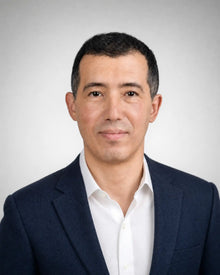
Jaouad Bentaguena is the founder of SKINĒDIT Paris. He researches and writes the SKINĒDIT Intelligence journal himself — working from peer-reviewed literature and alongside the scientists and clinical partners behind each protocol, to translate deep skin and hair science into something clear enough to act on.
About the author