Skin can look looser in your 40s and 50s because several parts of the face are changing together. Collagen and elastic fibres change, facial fat loses volume or shifts differently between compartments, and the supporting tissues and skeleton remodel. Menopause can add changes in skin thickness, hydration and elasticity. The result depends on your anatomy and history; there is no single age when everyone begins to sag.
You may first notice a softer jawline, flatter cheeks or a fold that remains when your face is relaxed. Understanding which layer has changed helps you choose care with a realistic purpose, from improving skin quality to addressing deeper changes in contour.
What changes beneath sagging skin?
“Sagging” often describes several observations at once. A review of facial ageing identifies changes in skin, fat, connective support and bone as interacting contributors.[1]
| Layer | What can change | What you may notice |
|---|---|---|
| Dermis | Collagen organisation and elastic-fibre function | Less recoil, fine lines and a looser texture |
| Facial fat | Volume and distribution within different compartments | Hollows, flatter cheeks or more prominent folds |
| Connective support | Relationships between retaining tissues and surrounding soft tissue | Changes in tissue position and contour |
| Facial skeleton | Regional remodelling around the eyes, midface and jaw | Changes in the support beneath soft tissue |
The table describes possible contributors, not a way to diagnose your own face. The same visible fold can reflect more than one layer.
How do collagen and elastin affect firmness?
Collagen contributes tensile strength; elastic fibres help skin stretch and recoil. With ageing, changes in these networks affect the material properties of the dermis. Repeated UV exposure adds damage, including the accumulation of abnormal elastic material known as solar elastosis.[1]

Skin elasticity is only part of facial contour. Better hydration may soften the appearance of fine lines, while a change in cheek volume involves deeper structures. Those goals need to be assessed separately.
Why can menopause make the change more noticeable?
Skin responds to oestrogen. The hormonal changes of the menopausal transition can affect collagen metabolism, skin thickness, water retention and elasticity.[2] Dryness may also make an existing change in texture more visible.
This helps explain why two women of the same age may notice different changes. Time since menopause, cumulative sun exposure and individual biology all matter. A more noticeable change does not mean every layer suddenly aged at the same speed.
The often-quoted estimate of around 30% skin-collagen loss in the first five years after menopause also appears in dermatology guidance.[3] It summarises earlier research; it is not a prediction for every woman, a measurement of facial sagging, or proof of an exact annual rate.
For the formulation questions specific to this stage of life, read supplements for sagging skin after menopause.
What happens to facial fat and its support?
Facial fat sits in separate superficial and deep compartments. They do not all change identically: some lose volume, while shifts in distribution and support can make others more prominent.[4]
This can help explain a face that looks hollow in one area and fuller near the jaw. Changes in the surrounding retaining tissues and underlying support also affect how soft tissue sits. Improving skin hydration will not restore a depleted fat compartment.
Does the facial skeleton change too?
Yes. Adult facial bone continues to remodel. A 2026 review describes regional changes involving the orbital rims, maxilla and mandible, with variation between individuals.[5] These changes can alter the foundation beneath the face’s soft tissue.

Bone is one part of the explanation. It does not account for every jowl, and facial remodelling is not proof that a beauty supplement can restore skeletal support. Our article on facial volume loss examines how these layers interact.
What can improve skin quality in your 40s and 50s?
A useful routine begins with the outcome you want to improve: dryness, fine wrinkles, reduced elasticity or a change in facial contour.
- Protect against further sun damage. Use broad-spectrum SPF 30 or higher alongside shade and protective clothing. Photoprotection remains relevant after visible ageing has appeared.[3]
- Address dryness. A suitable moisturiser can improve comfort and surface appearance. That benefit is different from repositioning loose tissue.
- Discuss appropriate topical treatment. A 2025 review of eight controlled trials found that tretinoin improved fine and coarse wrinkles in photodamaged facial skin.[6] Suitability and tolerability matter; these findings do not establish a facelift effect or apply automatically to every retinol cosmetic.
- Assess oral additions individually. Consider the complete formulation, daily amount, supporting evidence and compatibility with your medicines or existing supplements.
For the distinction between local and oral care, see topical vs ingestible skincare.
Explore a more considered firmness routine.
Discover the thirteen actives behind AGELESS, how they are organised around structure, the dermal matrix and cellular energy, and what its independent 90-day evaluation measured.
Can collagen supplements help sagging skin?
Research on collagen peptides commonly measures hydration and elasticity. A 2026 review of 35 randomised trials reported improvements in these outcomes. A 2025 review, however, found no significant benefit in its higher-quality or non-industry-funded subgroups.[7] [8] Study quality and formulation differences affect how confidently results can be interpreted.
These outcomes do not demonstrate replacement of lost facial volume or mechanical lifting of jowls. The fuller comparison is in do collagen supplements work for sagging skin?
How does AGELESS approach firmness?
AGELESS brings together thirteen actives in a collagen-free formula. Its three formulation systems—AGX-3™, NanoLift™ and MitoGen-9™—organise ingredients around mineral and structural physiology, the dermal matrix, and cellular energy and antioxidant defence.
This gives you a way to examine the role of each ingredient within the whole. Being collagen-free is a formulation choice, not evidence that collagen peptides are ineffective or that AGELESS is superior to them.
The complete AGELESS formula underwent an independent 90-day COMPLIFE® evaluation, with 33 women enrolled and 32 completing. At day 90, 96.9% of completers reported firmer or more elastic skin by self-assessment.[9]
The evaluation also included instrumental skin measurements. It was open-label and single-arm, without a placebo or parallel control. The self-assessment figure records participants’ perceptions; it cannot establish a causal effect or demonstrate anatomical lifting.
Explore the AGELESS formula, measured results and daily directions. For a visual explanation of the formulation systems, enter the guided AGELESS presentation.
When is a clinical assessment more useful?
If your main concern is pronounced tissue descent, persistent hollows or a substantial change in contour, a dermatologist or appropriately qualified surgeon can help distinguish skin laxity from volume and support changes.
Some procedures offer modest skin tightening; surgery can produce a larger lifting effect in suitable patients. Benefits, risks and recovery differ, and a consultation should establish what is appropriate for your anatomy.[10] Our guide to firming sagging skin without surgery considers the non-surgical options.
Frequently asked questions
Why does my face seem to have aged suddenly at 45 or 50?
Gradual changes in skin, fat and supporting structures can become noticeable together. The menopausal transition may add changes in dryness, thickness and elasticity. There is no universal age at which the face changes abruptly.
Does everyone lose exactly 1% of skin collagen each year?
No. Collagen changes depend on factors including age, hormonal status, sun exposure and the tissue measured. A population estimate should not be treated as an individual annual timetable.
Can sagging skin improve in your 50s?
Some aspects of skin quality can improve, including hydration and the appearance of fine wrinkles. The options for more substantial sagging depend on tissue position, volume and skin laxity. Those are different goals from moisturising the surface.
Does AGELESS rebuild facial bone or lift jowls?
Those effects have not been demonstrated. AGELESS is an oral formulation for a firmness-focused routine. Its formulation rationale and skin evaluation should not be interpreted as evidence of facial-bone regeneration or mechanical lifting.
Related reading
- What causes facial volume loss?
- Supplements for skin firmness and elasticity
- Do supplements help jowls?
References
- Farkas JP, Pessa JE, Hubbard B, Rohrich RJ. The science and theory behind facial aging. Plastic and Reconstructive Surgery Global Open. 2013;1:e8–e15.
- Thornton MJ. Estrogens and aging skin. Dermato-Endocrinology. 2013;5:264–270.
- American Academy of Dermatology. Caring for your skin in menopause.
- Wan D, Amirlak B, Rohrich R, Davis K. The clinical importance of the fat compartments in midfacial aging. Plastic and Reconstructive Surgery Global Open. 2014;1:e92.
- Lee KWA, Zamin RZ, Sobchyshyn M, et al. Facial bone aging: an update and literature review. JPRAS Open. 2026;48:828–845.
- Huang HY, Lee LTJ. Tretinoin for photodamaged facial skin: systematic review and meta-analysis of randomized controlled trials. Dermatology Practical & Conceptual. 2025;15:5172.
- Batool A, Abbas MS, Farooq R, et al. Oral collagen peptides and skin rejuvenation: a systematic review and an updated meta-analysis of randomized controlled trials. Journal of Cosmetic Dermatology. 2026;25:e71041.
- Myung SK, Park Y. Effects of collagen supplements on skin aging: a systematic review and meta-analysis of randomized controlled trials. The American Journal of Medicine. 2025;138:1264–1277.
- SKINĒDIT PARIS. AGELESS: published summary of the 90-day COMPLIFE® evaluation. Manufacturer-published summary of an independent, open-label, single-arm finished-product evaluation.
- American Academy of Dermatology. Many ways to firm sagging skin.

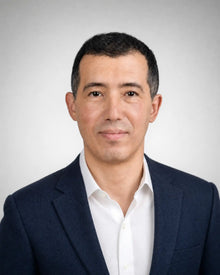
Jaouad Bentaguena est le fondateur de SKINĒDIT Paris. Il recherche et écrit lui-même le journal Intelligence de SKINĒDIT, à partir de la littérature évaluée par les pairs et en dialogue avec les scientifiques et partenaires cliniques associés aux protocoles, afin de rendre la science profonde de la peau et du cheveu claire et utile.
À propos de l’auteur