Do supplements help jowls? Some oral formulations may improve selected measures of skin quality, but supplements have not been established as treatments that lift jowls. The distinction is between supporting skin firmness and repositioning facial tissue. Understanding which change matters to you makes it easier to choose a useful routine and assess the evidence behind it.
A softer jawline can become noticeable in a photograph before it feels like a major change in the mirror. You may want the skin to look more resilient, the lower face to appear better defined, or both. Those are understandable goals, but they do not necessarily require the same approach.
This guide explains what contributes to jowls, where nutrition fits and what to look for when considering a formula such as AGELESS.
What causes jowls?
Jowls describe a fold or fullness that interrupts the lower jawline, usually beside the chin. Their appearance reflects changes across several tissue layers, rather than a single missing nutrient. Facial-anatomy research describes the interaction of skin, fat, retaining structures, muscle and bone. [1] [2]
- Skin: changes in collagen, elastin and other matrix components can reduce resilience.
- Facial fat: changes in volume and position can alter the lower-face contour.
- Retaining structures: the tissues that organise and support the face influence where folds develop.
- Bone: remodelling changes the underlying framework, alongside changes in the soft tissues.
The balance varies between people. Bone remodelling is part of facial ageing; it does not explain every jowl or mean that a bone-health supplement will restore the jawline.

What is the difference between skin firmness and a lifted jawline?
In a study, “firmer skin” might mean a change in an instrument reading or a participant's assessment. A lifted jawline would require evidence that the position or contour of the lower-face tissues changed. One result should not be substituted for the other.
| Reported result | What it tells you |
|---|---|
| Improved hydration | A change in measured skin moisture. It does not demonstrate tissue lifting. |
| Improved elasticity or laxity | A change in the specific skin parameter measured; the test method and study design matter. |
| “My skin feels firmer” | A participant's experience, which should be identified separately from instrumental results. |
| Reduced jowls | A claim about lower-face contour that requires its own relevant clinical evidence. |
Skin quality can still be a worthwhile goal. The useful question is whether a product's evidence matches the improvement you hope to see.
Which nutrients are relevant to skin firmness?
Several nutrients participate in the biology of connective tissue. Their roles help explain formulation choices, while human studies show whether a particular intervention changes a measured outcome.
Vitamin C and copper
Vitamin C is required for collagen synthesis. Copper is needed by lysyl oxidases, enzymes involved in cross-linking collagen and elastin. Adequate nutrition supports these normal processes; extra amounts are not automatically useful when intake is already sufficient. [3] [4]
Silicon: check the preparation
A controlled 20-week trial in 50 women with photodamaged skin reported improvements in selected skin properties with choline-stabilised orthosilicic acid. That preparation is different from Mesoporosil®, the silicon material in AGELESS. The trial should not be presented as evidence for every silicon source. [5]
Vitamin K2: distinguish bone biology from facial results
Vitamin K is involved in proteins associated with bone metabolism and normal blood clotting. These functions do not establish that taking K2 preserves the ageing jawbone or prevents jowls. General bone-health evidence cannot be transferred directly to facial contour. [6]
Astaxanthin: keep the studied combination visible
A placebo-controlled study reported improved facial elasticity after 12 weeks of astaxanthin combined with collagen hydrolysate. Because the ingredients were given together, the study cannot establish astaxanthin's independent contribution or validate a different finished formula. [7]
For the separate collagen question, read what collagen supplements can realistically improve.
Where does AGELESS fit?
AGELESS brings thirteen actives together around Structure · Matrix · Cellular Energy. Its formulation includes connective-tissue cofactors, Mesoporosil®, Ceramosides® and antioxidant actives, including astaxanthin and coenzyme Q10.
The reason to explore AGELESS is its approach to skin quality and the evaluation of the complete formula. It contains no collagen; that is a formulation choice, not evidence of superiority over collagen supplements.
What did the 90-day evaluation measure?
The independent COMPLIFE® evaluation enrolled 33 women aged 35–60; 32 completed 90 days. It was open-label and included instrumental measurements alongside participant feedback. [8]
SKINĒDIT's published summary reports group-average changes of +3% in skin elasticity and −3% in skin laxity at day 90. Separately, 96.9% of completers said their skin felt firmer. The first two figures describe instrumental outcomes; the third describes self-assessment.
These are reported results for the evaluated group, not promised individual changes. They do not demonstrate that AGELESS repositions jowls or rebuilds facial bone, and they do not establish superiority over another supplement.
Structure · Matrix · Cellular Energy
Looking for firmer-feeling, more resilient skin? Discover the thirteen actives behind AGELESS, the thinking that connects them, and the complete formula's 90-day evaluation. Explore the ingredients and daily routine in detail.
What can you do alongside a supplement?
A useful routine also addresses factors that influence skin ageing. Dermatology guidance recommends daily sun protection, gentle skincare, moisturising and avoiding smoking. [9]
- Protect exposed skin: use broad-spectrum SPF 30 or higher, seek shade and use protective clothing.
- Support comfort: choose cleansing and moisturising products suited to your skin, and review persistent irritation.
- Maintain varied nutrition: a supplement should have a clear purpose within your overall intake.
- Define the result: decide whether you want improved skin quality, a change in contour or advice about both.
If changes became more noticeable around menopause, our guide to skin firmness and supplements after menopause addresses that context.
What if your main goal is to reduce established jowls?
A qualified dermatologist or plastic surgeon can assess which tissues are contributing and discuss whether treatment is appropriate. The American Academy of Dermatology distinguishes modest skin-tightening options from the more substantial changes possible with surgery. Suitability, likely benefit, recovery and risk need individual assessment. [10]
You do not need to decide on a procedure to ask for an assessment. Understanding the anatomy can help you choose a realistic goal and avoid paying for a product or treatment aimed at a different problem.
Frequently asked questions
What is the best supplement for jowls?
No supplement has been established as the best treatment for jowls. If your goal is skin quality, compare the exact formulation, study design and measured outcomes. A claim about hydration or elasticity should not be treated as evidence of lifting.
Can vitamins prevent jowls?
Adequate vitamins and minerals support normal physiology, but taking additional amounts has not been shown to prevent jowls. Facial ageing involves several tissue layers and varies between people.
Can I improve jowls without surgery?
Some non-surgical treatments can improve selected aspects of skin laxity, but their effect depends on the anatomy and severity of the change. An individual assessment is more useful than choosing a treatment from a general promise of “tightening”. [10]
How long should I assess a skin supplement?
Use the timeframe of the specific evidence. AGELESS was evaluated over 90 days; the silicon preparation discussed above was studied for 20 weeks. Neither establishes a deadline for reducing jowls. Track the relevant skin-quality outcome rather than expecting a change in tissue position.
What should I check before taking AGELESS?
Read the complete ingredients and directions, including any overlap with supplements you already take. If you use medication, ask a pharmacist or clinician to review the formula. AGELESS contains vitamin K2, so anyone taking warfarin or a similar vitamin-K-antagonist anticoagulant should seek prescribing advice before adding it. [6]
For a broader comparison of oral approaches, read our guide to supplements for skin firmness and elasticity.
References
- Cotofana S, Fratila AAM, Schenck TL, et al. The anatomy of the aging face: a review. Facial Plastic Surgery. 2016;32:253–260.
- Reece EM, Pessa JE, Rohrich RJ. The mandibular septum: anatomical observations of the jowls in aging—implications for facial rejuvenation. Plastic and Reconstructive Surgery. 2008;121:1414–1420.
- NIH Office of Dietary Supplements. Vitamin C: fact sheet for health professionals.
- Vallet SD, Ricard-Blum S. Lysyl oxidases: from enzyme activity to extracellular matrix cross-links. Essays in Biochemistry. 2019;63:349–364.
- Barel A, Calomme M, Timchenko A, et al. Effect of oral intake of choline-stabilized orthosilicic acid on skin, nails and hair in women with photodamaged skin. Archives of Dermatological Research. 2005;297:147–153.
- NIH Office of Dietary Supplements. Vitamin K: fact sheet for health professionals, including bone-health evidence and anticoagulant interactions.
- Yoon HS, Cho HH, Cho S, et al. Astaxanthin combined with collagen hydrolysate: facial elasticity and matrix metalloproteinase expression in a placebo-controlled study. Journal of Medicinal Food. 2014;17:810–816.
- SKINĒDIT PARIS. AGELESS: published summary of the 90-day COMPLIFE® evaluation. Manufacturer-reported complete-formula results, including group averages and participant feedback; not an independently published journal article.
- American Academy of Dermatology. 11 ways to reduce premature skin aging.
- American Academy of Dermatology. Many ways to firm sagging skin.
Editorial note: SKINĒDIT PARIS, the publisher of this article, makes AGELESS. Ingredient research and complete-product evaluations answer different questions. Individual results vary. Food supplements do not replace a varied, balanced diet, a healthy lifestyle or appropriate medical care.

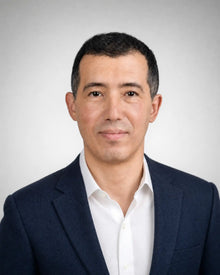
Jaouad Bentaguena est le fondateur de SKINĒDIT Paris. Il recherche et écrit lui-même le journal Intelligence de SKINĒDIT, à partir de la littérature évaluée par les pairs et en dialogue avec les scientifiques et partenaires cliniques associés aux protocoles, afin de rendre la science profonde de la peau et du cheveu claire et utile.
À propos de l’auteur